Category: Machine Operators

Advice for excavator, plant and machine drivers.

  • Why Your Hips Feel Tight After a Day in the Cab (And What to Do About It)

    Why Your Hips Feel Tight After a Day in the Cab (And What to Do About It)

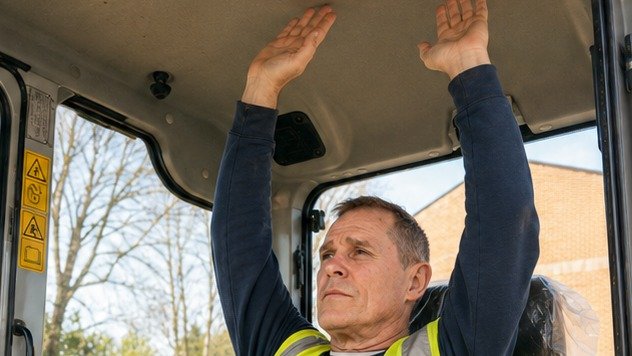
    You climb out of the machine at the end of the day and feel stiff.

    It takes a few steps before you can straighten up properly.

    Your lower back feels tight.

    Your hips feel locked up.

    Sometimes the stiffness spreads into your glutes or down the back of your legs.

    If you’ve spent years operating excavators, dumpers, loading shovels or other plant machinery, you’ve probably experienced it.

    The good news is that you’re not necessarily damaged.

    More often, your body is adapting to the position you spend most of your working day in.

    You’ve Been Sitting, Not Resting

    Many machine operators spend between 8 and 12 hours a day sitting in the cab.

    The body wasn’t designed to stay in one position for long periods.

    Research has shown that prolonged sitting is associated with increased musculoskeletal discomfort and reduced movement capacity.

    https://ijbnpa.biomedcentral.com/articles/10.1186/s12966-021-01191-y

    The important thing to understand is this:

    Sitting in a machine cab is not recovery.

    Your body is still working.

    You’re constantly operating controls, concentrating, stabilising yourself against vibration and maintaining the same posture for hours at a time.

    If you haven’t already read it, my article You Sit for 16 Hours a Day explains how much sitting many machine operators accumulate over a typical working day:

    You Sit for 16 Hours a Day. Here’s What That’s Doing to Your Body.

    What Happens To Your Hips?

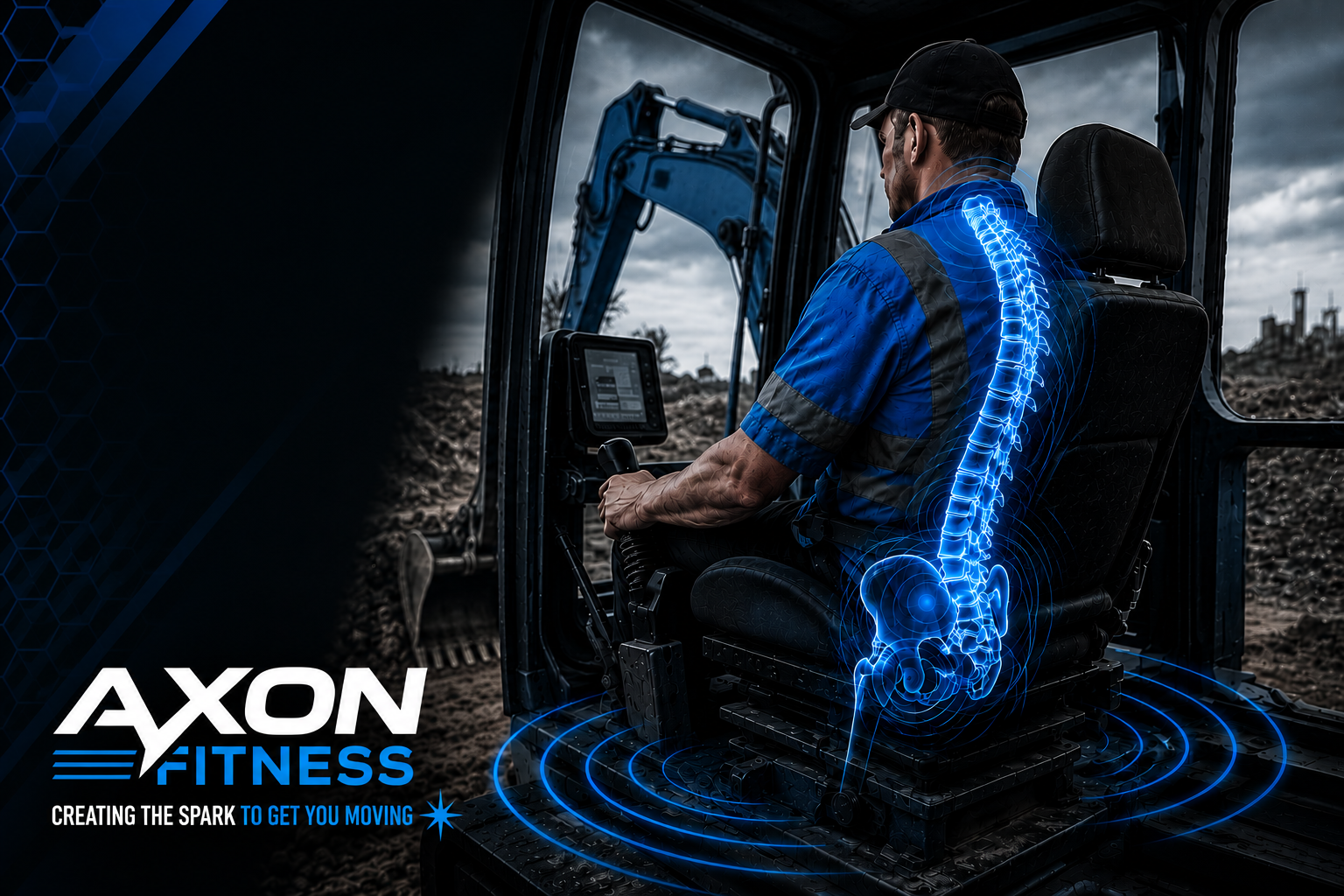
    When you sit for long periods, your hips remain in a flexed position.

    Over time:

    • Hip flexors spend hours shortened.
    • Glutes become less active.
    • The pelvis becomes less mobile.
    • Blood flow is reduced.
    • Movement options decrease.

    Research has found an association between prolonged sitting and reduced hip extension mobility.

    https://www.sciencedirect.com/science/article/pii/S2468781220305877

    In simple terms, your body becomes very efficient at sitting.

    Unfortunately, it becomes less efficient at standing, walking and moving freely.

    The Warning Signs

    You may notice:

    • Stiffness when getting out of the machine.
    • Difficulty standing upright.
    • Tightness across the front of the hips.
    • Lower back discomfort.
    • Aching glutes.
    • Feeling old for the first few minutes after climbing out of the cab.

    Many operators assume this is simply ageing.

    Age plays a role, but years of repetitive sitting are often a bigger factor.

    Why It Gets Worse After 40

    As we get older, we naturally lose some mobility, muscle mass and recovery capacity.

    Add decades of machine operating on top of that and the effects become more noticeable.

    The body adapts to what it does most often.

    If you spend years sitting in a machine cab, your body gradually becomes specialised for sitting.

    That’s one reason I wrote Your Skeleton Adapts to the Life You Live.

    The body is always adapting, whether we realise it or not.

    Read it here:

    Your Skeleton Adapts to the Life You Live

    You may also find this article useful:

    How Cab Vibration Affects Your Body Over Time

    Stretching Helps, But It’s Not The Whole Answer

    Most people immediately start looking for stretches.

    Stretching can help.

    But stretching alone rarely fixes the problem.

    The real solution usually involves three things.

    1. Move More Frequently

    If site conditions allow, get out of the machine periodically.

    Even a short walk around the machine can help break up long periods of sitting.

    Research suggests that regular interruptions to sitting may have positive effects on health and movement.

    https://www.cdc.gov/pcd/issues/2012/11_0323.htm

    2. Restore Hip Mobility

    Simple mobility exercises can help restore movement through the hips and pelvis.

    This doesn’t require turning yourself into a yoga instructor.

    You simply need enough mobility to move comfortably and efficiently.

    For some practical ideas, have a look at:

    Stretches for Machine Operators: Reduce Stiffness and Back Pain in the Cab

    3. Strengthen The Muscles That Support The Hips

    Weak glutes and a weak core often make hip stiffness feel worse.

    Strength training helps maintain muscle, support posture and improve movement quality.

    This is one reason why I often say that working hard isn’t the same thing as staying fit.

    Read more here:

    Why Working Hard Isn’t the Same as Staying Fit

    And if you’re new to training:

    Fitness for Machine Operators: Stay Strong & Pain-Free

    The Real Goal

    The goal isn’t to become flexible enough to do the splits.

    The goal is much simpler.

    To climb into the machine comfortably.

    To climb out comfortably.

    To finish the working day without feeling broken.

    To enjoy your evenings without constantly feeling stiff.

    And to still be moving well ten years from now.

    For most machine operators, that’s what really matters.

    Frequently Asked Questions

    Are tight hips causing my back pain?

    They can contribute. Limited hip mobility often places extra stress on the lower back during walking, bending and lifting.

    Is stretching enough?

    Usually not. Most people benefit from a combination of mobility work, strength training and regular movement throughout the day.

    How often should machine operators move?

    Whenever practical and safe to do so. Even brief breaks from sitting can help reduce the effects of prolonged static postures.

    Can cab vibration make hip stiffness worse?

    Yes. Prolonged exposure to vibration combined with sitting may contribute to discomfort and stiffness over time.

    Final Thoughts

    Hip stiffness is one of the most common complaints I hear from machine operators.

    The solution usually isn’t a miracle stretch or fancy gadget.

    It’s a combination of regular movement, mobility work and maintaining strength as you get older.

    Small actions performed consistently tend to beat big actions performed occasionally.

    Visit axon.fitness for more practical advice on staying fit, strong and healthy while working in construction.

    About the Author

    Stewart Axon is the founder of Axon Fitness. With more than 40 years of experience in construction, including machine operating, tiling, bathroom refurbishment and physical labour, he understands first-hand the wear and tear that demanding work places on the body. Through Axon Fitness, he helps machine operators, tradesmen and adults over 40 stay strong, mobile and capable for the long haul.
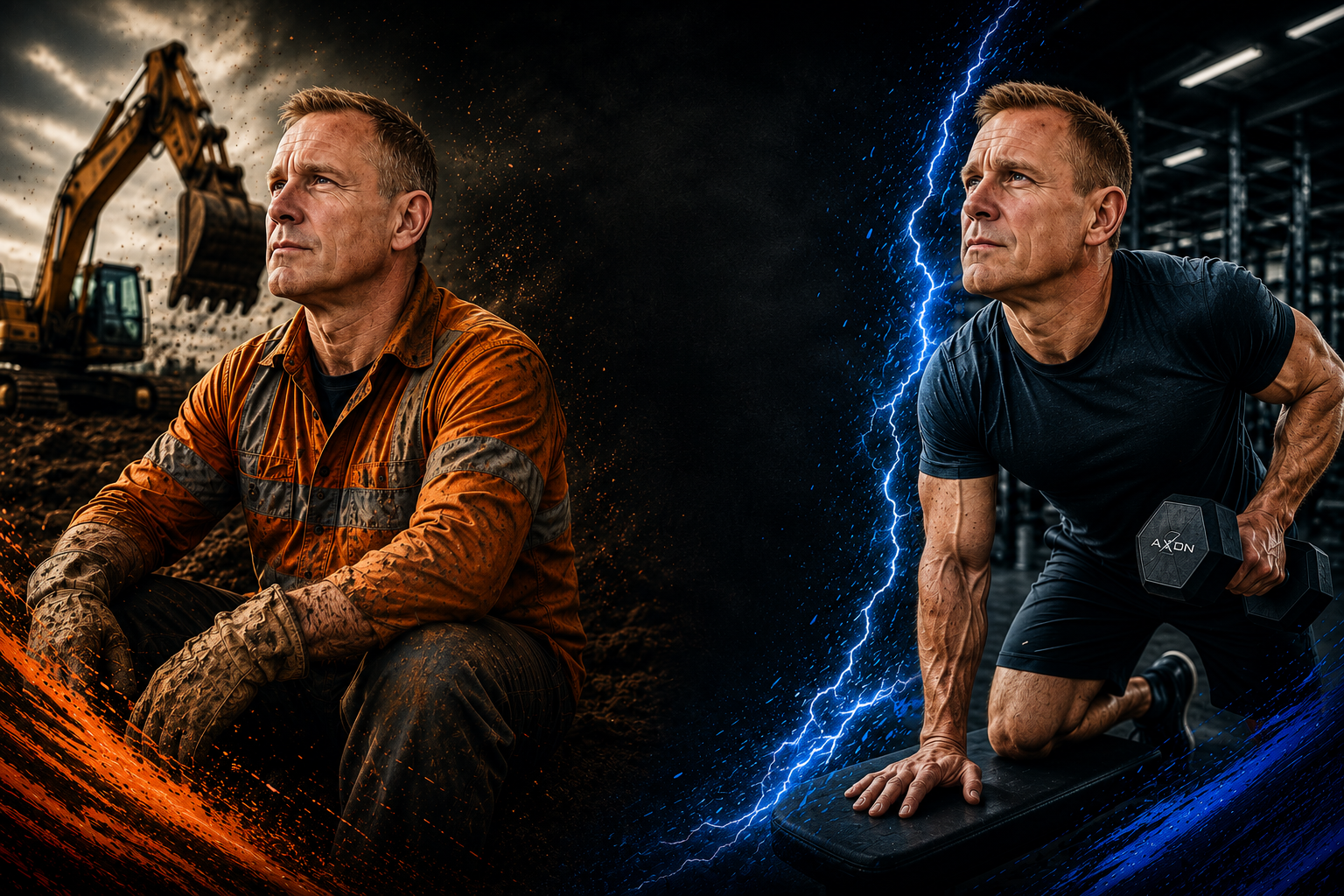
  • Why Working Hard Isn’t the Same as Staying Fit

    Why Working Hard Isn’t the Same as Staying Fit

    If you’ve worked in construction long enough, you’ve probably heard it before.

    “I don’t need the gym. I work hard all day.”

    And on the surface, it sounds reasonable.

    After all, construction is physically demanding.

    Machine operators spend long hours concentrating in the cab. Tradesmen lift, carry, bend, twist, kneel and climb. Labourers can easily finish a shift feeling completely exhausted.

    The problem is that being tired and being fit are not always the same thing.

    In fact, many workers are physically exhausted while at the same time becoming less mobile, less resilient and less fit as the years go by.

    Fatigue and Fitness Are Not the Same Thing

    One of the biggest misconceptions in construction is believing that because work feels hard, it must automatically improve fitness.

    Work creates fatigue.

    Fitness is the body’s ability to perform and recover.

    They’re not the same thing.

    A machine operator may spend ten hours concentrating, sitting, absorbing vibration and dealing with mental fatigue.

    A tradesman may spend the day carrying materials, kneeling on floors or working overhead.

    Both may finish the day exhausted.

    But exhaustion alone doesn’t automatically improve:

    • mobility
    • cardiovascular fitness
    • strength balance
    • joint health
    • movement quality
    • or long-term resilience

    Research has shown that physically demanding occupations do not necessarily provide the same health benefits as structured exercise. This is sometimes referred to as the “physical activity paradox.”

    https://bjsm.bmj.com/content/52/3/149

    Repetitive Work Creates Repetitive Bodies

    The body adapts to whatever it does most often.

    That’s why machine operators often develop:

    • tight hips
    • stiff lower backs
    • restricted shoulders
    • poor circulation
    • reduced movement variety

    I discussed this further in:

    You Sit for 16 Hours a Day. Here’s What That’s Doing to Your Body.

    The same thing happens to tradesmen.

    A tiler spends years kneeling.

    A decorator spends years reaching overhead.

    A groundworker spends years lifting from awkward positions.

    The body becomes extremely good at those positions.

    But it can gradually lose capacity everywhere else.

    Work Doesn’t Always Build Balanced Strength

    Many workers are strong.

    Very strong.

    But strength developed through work is often highly specific.

    You might carry heavy materials every day yet struggle to:

    • squat properly
    • touch your toes
    • rotate your shoulders fully
    • maintain good posture
    • or move without stiffness

    That’s because repetitive work loads the same tissues repeatedly.

    Balanced strength training helps fill the gaps.

    Research consistently shows that resistance training improves strength, mobility, bone health and physical function as we age.

    https://pubmed.ncbi.nlm.nih.gov/30946242/

    This isn’t about bodybuilding.

    It’s about maintaining a body that works well.

    The Cost of Constant Wear and Tear

    Construction can be physically demanding without being physically protective.

    Over years, many workers accept:

    • stiffness
    • aches
    • reduced movement
    • lower energy
    • slower recovery

    as simply part of getting older.

    The reality is that many of these changes are not caused by age alone.

    They’re often the result of decades of repetitive movement, limited recovery and neglecting the basic maintenance the body needs.

    What Real Fitness Looks Like for Working People

    For most construction workers, fitness isn’t about six-pack abs.

    It’s about:

    • getting out of the cab without stiffness
    • climbing ladders confidently
    • lifting safely
    • recovering faster
    • reducing aches and pains
    • having energy left after work
    • staying independent later in life

    That’s real-world fitness.

    And sometimes that means doing things your job doesn’t provide.

    Walking.

    Mobility work.

    Strength training.

    Better recovery habits.

    Better sleep.

    Regular movement outside work.

    Final Thoughts

    Working hard deserves respect.

    Construction workers earn every penny.

    But working hard and staying fit are not automatically the same thing.

    Work can wear the body down just as easily as it can build it up.

    The goal isn’t to stop working hard.

    The goal is to give your body the movement, strength and recovery it needs so you can keep doing the things that matter for years to come.

    Because being exhausted at the end of the day isn’t necessarily a sign of fitness.

    Sometimes it’s simply a sign that your body needs better support.

    About the Author

    I’m Stewart, founder of Axon Fitness.

    I’ve spent over 40 years working in construction — from labouring and demolition to tiling, bathroom refurbishments and operating 360 excavators. I’ve also worked as a personal trainer, which gave me a deeper understanding of how physically demanding work changes the body over time.

    Axon Fitness was built around a simple idea:

    Helping working people stay strong, mobile and capable for the long haul.
    Not bodybuilding.

    Not fitness trends.

    Just practical movement, strength and recovery strategies built for real life, long hours and ageing bodies.

    Especially for:

    • machine operators
    • tradesmen
    • construction workers
    • and adults over 40 who want to keep moving properly for years to come.

    axon.fitness

  • How Cab Vibration Affects Your Body Over Time

    How Cab Vibration Affects Your Body Over Time

    Most people think machine driving is easy on the body because you’re sitting down all day.

    But speak to experienced excavator drivers, dumper drivers, plant operators, or long-term machine operators, and you’ll hear the same things repeated over and over:

    • stiff hips
    • tight lower backs
    • neck tension
    • aching shoulders
    • heavy legs
    • fatigue that feels deeper than it should

    And one of the biggest reasons rarely gets talked about properly.

    Constant vibration.

    Your Body Was Never Designed for Continuous Vibration

    Every day in machinery, your body absorbs thousands of small vibrations through the seat, floor, controls, and cab itself.

    You may not consciously notice it after years on the machines because it becomes normal.

    But your nervous system, joints, muscles, and spine still absorb the load.

    Research into whole-body vibration exposure has linked long-term machine operation with increased rates of:

    • lower back pain
    • spinal compression
    • fatigue
    • neck and shoulder discomfort
    • circulation problems
    • musculoskeletal wear and tear

    According to the UK Health and Safety Executive (HSE), prolonged exposure to whole-body vibration can contribute to back pain and other health problems over time.

    Research:

    Why Machine Operators Often Feel More Tired Than They Should

    A lot of machine operators finish the day confused about why they feel exhausted when they haven’t been lifting or digging manually all day.

    But fatigue is not just about movement.

    Concentration, posture, restricted movement, vibration exposure, and low-level muscular tension all add up.

    Your body is constantly stabilising itself, even while sitting.

    Over time, this creates chronic tightness through:

    • the hips
    • lower back
    • upper traps
    • neck
    • shoulders

    Many operators also develop shallow breathing patterns without realising it, especially during long periods of concentration.

    Vibration Plus Sitting Is a Bad Combination

    Sitting itself already reduces movement through the hips and spine.

    Add vibration to the equation, and the body becomes even more compressed and restricted over time.

    This is one reason many machine drivers start noticing:

    • difficulty getting out of the cab
    • stiff hips after work
    • reduced rotation
    • tight hamstrings
    • lower back pressure
    • swollen or heavy legs

    The body slowly adapts to the position and environment it spends most time in.

    That adaptation is not always positive.

    The Problems Usually Build Slowly

    Most experienced machine operators do not suddenly “break down.”

    It builds gradually over years.

    At first:

    • you just feel stiff occasionally

    Then:

    • recovery takes longer
    • movement becomes more restricted
    • small aches become constant
    • fatigue builds quicker
    • mobility starts disappearing

    Many men ignore it because it becomes part of normal working life.

    But the body keeps score.

    What Actually Helps

    You do not need to live in the gym to reduce the effects of machine work.

    Small consistent habits matter more.

    The biggest improvements usually come from:

    • improving hip mobility
    • strengthening the core and glutes
    • walking more outside working hours
    • improving hydration
    • breaking up sitting time where possible
    • improving circulation
    • basic strength training
    • better recovery habits

    Even 5–10 minutes of movement daily can make a noticeable difference over time.

    If you struggle with stiffness after long hours operating machinery, you may also find these useful:

    • Why Your Legs Feel Heavy and Swollen After a Day in the Cab
    • Stretches for Machine Operators: Reduce Stiffness and Back Pain in the Cab

    Final Thoughts

    Machine operating is skilled work.

    But long hours sitting in vibration, restricted positions, and constant concentration place more stress on the body than many people realise.

    The earlier you start looking after mobility, recovery, strength, and circulation, the easier it is to stay capable long term.

    Because staying physically capable is not just about work.

    It affects:

    • independence
    • confidence
    • energy
    • long-term quality of life

    About the Author

    Stewart is the founder of Axon Fitness and has spent over 40 years working in construction, including machine driving, tiling, demolition, and refurbishment work.

    Alongside decades on site, he also worked as a personal trainer and now focuses on helping machine operators, tradesmen, and over-40s stay strong, mobile, and capable for the long haul.

    Want to Move Better and Feel Less Broken After Work?

    Visit axon.fitness for practical fitness, mobility, and recovery guidance built around real working life — not influencer fitness culture.

  • Why Your Legs Feel Heavy and Swollen After a Day in the Cab

    Why Your Legs Feel Heavy and Swollen After a Day in the Cab

    You know the feeling. You climb down from the cab after a long shift and your legs feel like they belong to someone else. Heavy. Stiff. Maybe your ankles are puffy and your boots feel tighter than they did at 7am. You sit down at home and within an hour your feet are up on the coffee table because they’re throbbing.

    Most blokes write it off as tiredness. Often, though, it’s down to blood and fluid collecting in your lower legs after hours of sitting – and machine operators, who can’t easily get up and move, are particularly prone to it.

    Here’s what’s actually going on and, more importantly, what you can do about it.

    What’s Happening Inside Your Legs

    Your heart pumps blood down to your legs easily enough – gravity does half the job. The hard part is getting it back up. That’s the job of your leg muscles. Every time you walk or move, your calf muscles squeeze the veins and push blood back up toward your heart.

    When you’re sitting still in a cab for 10 hours, those muscles aren’t doing much. Blood starts to pool in your lower legs. Fluid leaks out of the blood vessels into the surrounding tissue. That’s the swelling you feel in your ankles. That’s why your legs feel heavy – they literally are heavier, full of fluid that shouldn’t be there.

    This is called venous pooling, and it’s completely normal after prolonged sitting. Research measuring blood flow and lower limb volume during prolonged sitting confirms that fluid accumulation in the legs begins within the first few hours and compounds over time. The problem is that for machine operators, it happens every single day.

    Why Operators Get It Worse Than Office Workers

    An office worker who sits all day can at least get up to make a coffee, walk to a meeting, nip to the bathroom whenever they want. Movement is built into their day even if they don’t think about it.

    You don’t have that option.

    When you’re in the cab, you’re in the cab. You might go hours without getting out. And on top of the sitting, there’s another factor most people don’t think about:

    Whole-body vibration.

    The constant vibration from operating machinery – excavators, dozers, graders, forklifts – is best known for its link with back problems. Its effect on circulation in the legs is less well researched, but it adds to the physical strain of long hours in the seat.

    A review of research into whole-body vibration exposure in construction equipment operators (CDC) identified vibration and awkward postures as two key risk factors for back, neck and other musculoskeletal problems. A more recent study on WBV exposure and musculoskeletal disorders in heavy equipment operators found lower back pain was the most common complaint.

    For your legs, the bigger issue is the hours of unbroken sitting – which is why a long day in the cab can leave them feeling worse than a day at a desk, where it’s easier to get up and move.

    What Makes It Worse

    A few things stack on top of each other to turn a manageable situation into a really uncomfortable one:

    Dehydration. Operators often under drink on the job – there’s no easy toilet break, so people hold off on the water. Not drinking enough leaves you more tired and sluggish, and the NHS notes that dehydration raises the risk of blood clots. If you want to go deeper on this one, read Why Your Back Pain Might Be a Hydration Problem.

    The commute. You finish a 10-hour shift in the cab, then sit in the car for 30–45 minutes to drive home. Your legs get no break between the two. By the time you’re home, you’ve been sitting for close to 11 hours straight.

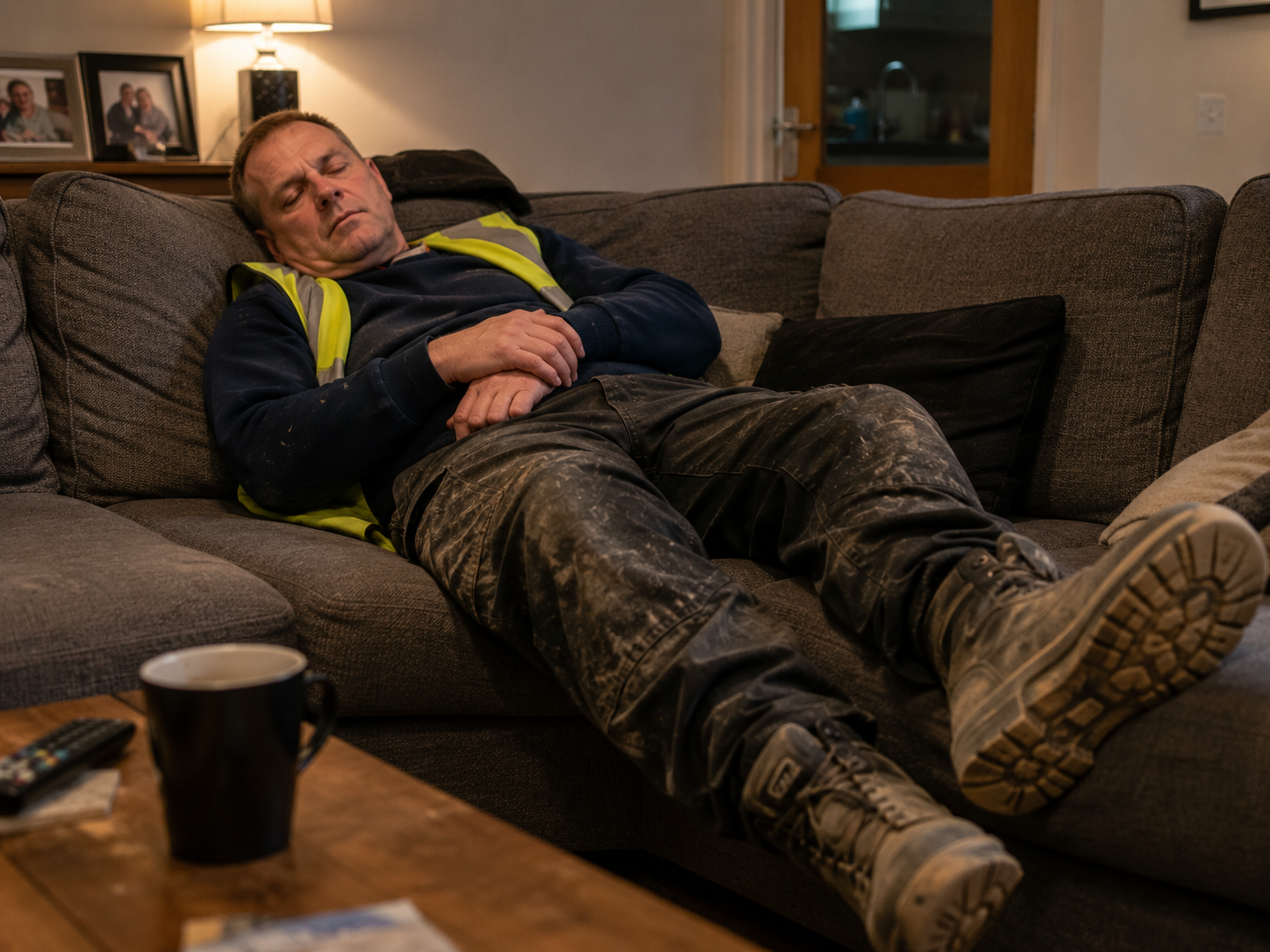
    The sofa. You’re tired. You sit down, watch TV for a few hours. Add another 2–3 hours of sitting. By bedtime, depending on your commute and shift length, you might have been sitting for 14–16 hours with barely a break. We went into this in detail in You Sit for 16 Hours a Day – worth a read if you haven’t already.

    Poor footwear. Tight work boots restrict blood flow in the feet and lower leg. If your boots are on the snug side, your circulation is working against them all day.

    What Actually Fixes It

    The good news is you don’t need to overhaul your life. Small, consistent changes make a real difference.

    Move when you can, even for 2 minutes. Every time you get out of the cab – smoko, lunch, waiting for a truck – walk around for a couple of minutes. Don’t just stand there. Walk. Calf raises (rising up onto your toes and back down) are even better. 20 reps gets blood moving fast.

    Ankle circles while seated. You can do these in the cab without getting out. Lift one foot slightly and circle the ankle, both directions, 10 times each side. It’s not glamorous but it works. If you’ve read Stretches for Machine Operators, some of those can also be done without leaving the seat.

    Drink more water. Yes, this is annoying when you can’t easily get to a toilet. But staying hydrated is part of standard NHS advice for anyone sitting for long periods. Aim for consistent sips throughout the day rather than smashing a litre at lunch.

    Elevate your legs after work. When you get home, put your feet up above hip height for 20 minutes before you sit on the sofa normally. This helps the pooled fluid drain and can ease the heavy, throbbing feeling.

    Compression socks. These aren’t just for long-haul flights. They apply gentle pressure to the lower leg, helping push blood back up, and can ease swelling and that heavy feeling. Light compression (around 15–20 mmHg) is widely available, but check with a pharmacist or GP first if you have diabetes, poor circulation in your feet, or a heart or skin condition.

    Check your boots. If your work boots are tight across the foot or ankle, it’s worth getting a pair with more room. It’s a small thing that adds up over a 10-hour shift.

    When to Be Concerned

    Heavy, swollen legs after a shift are usually just venous pooling – uncomfortable but not dangerous. But some warning signs mean you need urgent medical advice the same day – ask for an urgent GP appointment or call NHS 111 – rather than putting your feet up and waiting to see if it settles:

    • Sudden or unexplained swelling in one leg (not both), especially with pain, warmth or redness
    • Redness, warmth, or tenderness in one area of the calf
    • Pain that feels like a cramp that won’t go away
    • Skin that looks shiny, stretched, or discoloured

    These can be signs of a deep vein thrombosis (DVT) – a blood clot in a deep vein. DVTs are more common in people who sit for long periods regularly. They’re treatable, but they need to be caught early. Don’t tough it out if something feels off.

    Call 999 or go to A&E straight away if you have chest pain or sudden breathlessness. This can mean a clot has travelled to your lungs, which is an emergency. Don’t drive yourself.

    If in doubt, get it checked. It takes 10 minutes and it’s not worth guessing on.

    If both legs swell after work and it hasn’t improved after a few days of trying the steps above, or it keeps getting worse, book a GP appointment.

    The Bottom Line

    Heavy, swollen legs after a long shift aren’t just part of the job. They’re a sign that hours of sitting are letting fluid collect in your lower legs – and that long, unbroken spells of sitting, in the cab and at home, are taking a toll.

    The fixes aren’t complicated: move when you can, drink water, elevate your legs after work, and consider compression socks. None of it takes much time or costs much money.

    But if it’s happening every single day and nothing’s changing, that’s worth looking at properly. That’s what Axon Fitness is about – practical information and guidance for building a simple routine around your actual working day, not some gym-based fantasy that doesn’t fit your life.

    Got a question about anything in this article? Get in touch through the contact form.

    Related Reading

    Stewart Axon has over 40 years in the construction industry and professional fitness training credentials. He built Axon Fitness to share practical fitness information and guidance with machine operators and men over 40 who need to stay strong, mobile and capable in the real world.

  • You Sit for 16 Hours a Day. Here’s What That’s Doing to Your Body.

    You Sit for 16 Hours a Day. Here’s What That’s Doing to Your Body.

    Most machine operators know the cab takes a toll. But here’s the thing most people don’t stop to add up – the cab is just one part of it.

    Run through a typical day:

    • Commute to site: 30–60 minutes in the car
    • Morning shift in the cab: 4–5 hours
    • Lunch break: sitting in the cab or the welfare
    • Afternoon shift in the cab: 4–5 hours
    • Commute home: 30–60 minutes in the car
    • Evening on the sofa: 2–3 hours
    • In bed: 7–8 hours

    Add that up and you’re looking at 16 to 18 hours of your day where your body is in some form of seated or lying position. You might be getting 6 hours of actual sleep in that bed time, but your body is still horizontal and inactive for the rest of it.

    The cab gets the blame. But your body is experiencing the cumulative effect of all of it.

    The Commute: You’re Already Sitting Before You Start

    A lot of operators drive 30, 45, sometimes over an hour each way to site. You arrive at work already stiff. Your hip flexors have been shortened in a car seat since 6am. Your lower back has already been in a flexed position for an hour.

    Then you climb straight into the cab.

    Car seats are generally worse for your posture than plant seats. They’re lower, they put you in a deeper hip flexion, and the steering wheel encourages a rounded shoulder position. By the time you get to site, your body hasn’t warmed up – it’s already tightened up.

    What this means: the first hour in the cab is your most vulnerable. Your spine hasn’t moved through its full range, your muscles are cold and tight, and if you’re doing heavy dig or slew work straight away, you’re loading a body that’s already compromised.

    Simple fix: Even 5 minutes of movement before you climb in – a short walk, a few hip circles, some shoulder rolls – makes a real difference to how your body handles the first couple of hours.

    The Cab: The Longest Stretch

    Ten hours in the cab is the biggest block and we’ve covered what that does to your circulation, back, hips and neck in detail here: 10+ Hours in the Cab: What It Does to Your Blood Flow, Back and Body

    The short version: your circulation slows, your discs stop getting the movement they need, your hip flexors tighten, your glutes switch off, and your neck takes a constant low-level beating from holding your head in a forward position.

    The key point here is that the cab is a long stint with no natural movement breaks built in. A bricklayer, a groundworker, a sparky – they’re moving constantly. You’re not. That’s not a character flaw, it’s the nature of the job. But it means you have to be deliberate about creating movement where the job doesn’t give it to you.Why Your Legs Feel Heavy and Swollen After a Day in the Cab

    The Sofa: Where Recovery Goes to Die

    You’re tired. The shift was long. You get home, eat, sit down, and the next time you move properly it’s to go to bed. That’s a completely understandable pattern and most operators are living it.

    The problem is that your body was hoping the evening was going to be its recovery window. After hours of restricted movement, it needed some circulation, some gentle movement through the hips and spine, some blood flow to the muscles that have been compressed and switched off all day.

    Instead, it gets another 2–3 hours of sitting.

    The sofa also tends to put you in worse positions than your cab seat. Slouched, asymmetrical, legs up, one arm on the armrest. None of it is terrible in isolation, but stacked on top of everything else, it extends the damage window right into the night.

    What this means practically: you don’t need to go to the gym after work. But 10–15 minutes of movement in the evening – even just walking around the block, a few stretches on the floor while the TV is on – is enough to interrupt the pattern and give your body what it was looking for.

    The stretches that matter most in the evening are the same ones that undo what the cab does: hip flexor stretches, spinal rotation, hamstring work. Full guide here: Stretches for Machine Operators: Beat Cab Stiffness

    Bed: When Sitting Becomes Lying

    Eight hours in bed should be recovery time. And it mostly is – sleep is genuinely the most important thing for physical repair. But a few things are worth knowing.

    Sleep position matters more than most people think. If you sleep on your side with your knees drawn up (foetal position), you’re keeping your hip flexors in a shortened position for another 6–8 hours on top of everything else. Over time, this reinforces the tightness you’ve been building all day.

    Sleeping on your back with a pillow under your knees takes the pressure off your lumbar spine and allows your hip flexors to lengthen. It’s not comfortable at first if you’re not used to it, but for operators with lower back issues it can make a noticeable difference within a few weeks.

    Poor sleep also amplifies pain perception. If you’re getting less than 6–7 hours of quality sleep, your nervous system becomes more sensitive to pain signals. That back that feels manageable on a good night’s sleep feels significantly worse when you’re running on 5 hours. It’s not in your head – it’s a measurable physiological effect.

    Hydration before bed is also relevant. You’ve probably been under drinking during the shift and your body is dehydrated by the time you get home. Dehydrated discs and joints recover more slowly overnight. More on the hydration side here: Why Your Back Pain Might Be a Hydration Problem

    The Real Problem: It Compounds

    Any one of these – the commute, the cab, the sofa, the poor sleep – your body could manage. The problem is that they stack. Every day. Five days a week. Fifty weeks a year.

    The operator who’s fine at 35 and falling apart at 48 didn’t suddenly get unlucky. The damage accumulated slowly, and at some point it crossed a threshold where it became visible as pain, stiffness, fatigue, and loss of mobility.

    The good news is that compounding works both ways. Small consistent inputs – a bit of movement here, better hydration, a few stretches before bed – also stack up. They don’t feel like much in week one, but over months they shift the trajectory.

    What a Better Day Actually Looks Like

    You don’t need to rebuild your life. You need a handful of deliberate habits dropped into the day you’re already living.

    | Part of the day | The problem | The fix |

    | Commute in | Arriving already stiff | 5 min movement before climbing in the cab |

    | In the cab | 10 hours restricted sitting | Move at every break, ankle circles while sitting |

    | Lunchbreak | More sitting | Walk for 10 minutes, do 2–3 hip stretches |

    | Commute home | Extending the sitting | Nothing you can do – offset it in the evening |

    | Evening | Missed recovery window | 10–15 min movement while TV is on |

    | Bed | Hip flexors stay short | Sleep on back with pillow under knees |

    None of that is dramatic. All of it adds up.

    Make It Work Around Your Day

    If your body is already giving you signals – stiff back in the morning, heavy legs, aches that used to go away overnight but don’t anymore – that’s your body telling you the accumulation is starting to show.

    The advice I give machine operators is built around exactly this. Not gym programmes designed for people with free evenings and fresh bodies. A practical approach that fits into the day you’re already living and targets the specific damage your working life is doing.

    Send me a message through the contact form and we’ll have a conversation about where you’re at.

    Stewart Axon has spent over 40 years split between construction sites and professional fitness training. He helps machine operators and men over 40 who want to stay strong, mobile and capable – without it taking over their life. He’s been on the tools, in the cab, and on site. He knows what real working life looks like.

  • Stretches for Machine Operators: Reduce Stiffness and Back Pain in the Cab

    Stretches for Machine Operators: Reduce Stiffness and Back Pain in the Cab

    If you’re finishing a shift and your back feels like it’s been in a vice, your hips are locked up, and your neck is stiff before you’ve even got to the car – that’s not just tiredness. That’s what hours in the cab does to your body, day after day.

    The good news is it doesn’t take much to change it. Ten minutes at break times, a few simple stretches, and you’ll notice the difference within a week. Below are some practical movements that can help reduce the stiffness that builds up during long hours in the cab.

    Why Machine Operators Get So Stiff

    It’s not just the sitting. It’s the combination of sitting in one position, the constant vibration coming through the seat, and the awkward postures – twisting to check your dig, craning your neck at a monitor, or just holding your arms in the same position for hours on end.

    Your hip flexors shorten because they’re never fully extended. Your lower back takes compression from the vibration. Your neck tightens from looking forward and slightly down for most of the day. Over time, that stiffness compounds. What starts as feeling a bit tight after a long shift turns into the kind of chronic back and hip pain that starts affecting everything else.

    If you want to understand more about what’s actually happening physically during a long day in the cab, this goes into more detail: 10+ Hours in the Cab: What It’s Doing to Your Body.

    The 5 Best Stretches for Machine Operators

    These five target the exact areas that take the most punishment in the cab. No equipment needed. You can do all of them on site.

    1. Hip Flexor Stretch

    Targets: Hip flexors, front of the thigh, lower back

    This is the most important one. Your hip flexors are in a shortened position for your entire shift – this stretch undoes that directly.

    Stand next to your machine or any stable surface. Step one foot forward into a lunge position, dropping your back knee toward the ground (use a folded jacket under the knee if the ground is rough). Keep your back straight and gently push your hips forward until you feel a stretch at the front of your back hip. Hold for 30 seconds each side.

    When to do it: End of shift, or any time you climb out of the cab for a break. Even doing it once a day makes a difference.

    2. Seated Spinal Twist

    Targets: Lower back, spine, hips

    You can do this one right in the cab if you want. Sit upright in your seat, feet flat on the floor. Place your right hand on your left knee and gently twist your upper body to the left, looking over your left shoulder. Hold for 20–30 seconds, then switch sides.

    It sounds simple because it is. But it helps decompress the spine after hours of vibration and compression, and most operators have never done it once in their working life.

    When to do it: During a break without leaving the cab, or sitting on a step at lunch.

    3. Neck Side Stretch

    Targets: Neck, upper traps, top of the shoulders

    If you’re finishing shifts with a tight, heavy feeling across the top of your shoulders and up the sides of your neck – this is for you.

    Sit or stand upright. Drop your right ear toward your right shoulder (don’t force it, just let the weight of your head do the work). Place your right hand gently on the side of your head for a bit of extra pull if needed. Hold for 20–30 seconds each side.

    The key is keeping your opposite shoulder down – don’t let it creep up toward your ear.

    When to do it: In the cab, at break, or before you get in the car to go home.

    4. Standing Hamstring Stretch

    Targets: Hamstrings, lower back

    Tight hamstrings pull on your lower back and make everything worse. This one’s easy to do on site.

    Find a step, platform, or even use the track of the machine. Place one heel up on the surface with your leg straight. Keep your back flat (don’t round forward) and hinge at the hips until you feel a stretch down the back of your raised leg. Hold 30 seconds each side.

    When to do it: While waiting – for a banksman, for the next load, at the end of a pour. Any dead time works.

    5. Chest Opener

    Targets: Chest, front of the shoulders, upper back

    Driving keeps your arms forward and your shoulders rounded for hours. This reverses it.

    Stand upright and clasp your hands behind your back, interlacing your fingers. Straighten your arms and gently lift them while opening your chest and squeezing your shoulder blades together. Hold for 20–30 seconds.

    If you can’t clasp your hands, just pull both arms back behind you as far as comfortable. You’ll still feel it.

    When to do it: Any time you’re standing and waiting. Takes 30 seconds.

    When to Fit These In

    You don’t need a dedicated stretching session. Just attach them to things you’re already doing:

    • Start of shift: Hip flexor stretch and chest opener while the machine warms up
    • Mid-morning break: Seated spinal twist and neck stretch in the cab
    • Lunch: Standing hamstring stretch while you’re out of the machine
    • End of shift: All five, takes under 10 minutes

    That’s it. You’re not being asked to do a workout on top of a full day’s graft. Just move a bit at the natural break points that already exist in your day.

    What Happens If You Don’t

    The stiffness you feel now doesn’t just stay the same – it builds. Tight hip flexors left unaddressed lead to lower back pain. Lower back pain that gets ignored becomes the kind of chronic issue that starts affecting your sleep, your mood, and eventually your ability to work.

    It’s not dramatic. It just compounds quietly, year after year, until one day you’re dealing with something that a physio or a doctor is telling you could have been prevented.

    And it’s not just the stretching – hydration plays a bigger role in back pain than most people realise. If your back pain is already more than just stiffness, this is worth a read: Why Your Back Pain Might Be a Hydration Problem.

    Why Your Legs Feel Heavy and Swollen After a Day in the Cab

    Need More Help?

    If you’re already past the stiffness stage – ongoing back pain, hips that won’t loosen up no matter what you do, or you want practical advice that accounts for what your job actually does to your body – I’m happy to help.

    Get in touch through the contact form.

    Stewart Axon has spent over 40 years split between construction sites and professional fitness training. He helps machine operators and men over 40 who want to stay strong, mobile and capable – without it taking over their life. He’s been on the tools, in the cab, and on site. He knows what real working life looks like.

    Related reading:

  • Fitness for Machine Operators: Stay Strong & Pain-Free

    Fitness for Machine Operators: Stay Strong & Pain-Free

    Why Machine Operators Lose Fitness Faster (And What to Do About It)

    You know the feeling. You step down from the cab at the end of a shift and your back is tight, your hips feel locked up, and you’re more worn out than the work should make you. Maybe you used to bounce back quicker. Maybe the stiffness that used to clear up overnight now hangs around for days. If that sounds familiar, you’re not imagining it, and it’s not just age.

    I spent over 40 years in demolition, groundworks, and machine driving. I know what a long day in the cab does to your body, because I lived it. And I know that the standard fitness advice you’ll find online wasn’t written for people like us.

    There’s a specific reason machine operators lose fitness faster than most, and it’s got nothing to do with laziness or not trying hard enough. It’s got everything to do with what the cab does to your body, hour after hour, year after year.

    The Cab Is Working Against Your Body

    Sitting in a machine for 8–10 hours a day isn’t the same as sitting at a desk. You’ve got the vibration running through the seat, you’re bracing constantly against movement, and your body is held in the same fixed position for the bulk of your shift. Do that for a few years and your body starts adapting, not in a good way.

    Your hip flexors, the muscles at the front of your hips, shorten and tighten from being held in a bent position all day. At the same time, your glutes gradually stop activating properly. They’re not being used, so the body stops calling on them. That’s a problem, because your glutes are supposed to be one of the main stabilisers of your lower back.

    When the glutes switch off, the lower back takes over. It compensates, absorbs load it wasn’t built to handle, and gradually gets overloaded. That’s where a lot of the pain comes from, not damage from one big incident, but from a system that’s been quietly breaking down while you were getting on with the job.

    On top of that, whole-body vibration, the kind you get from years in plant equipment, puts cumulative stress on the spine. And the longer you’re in the cab, the more your poor posture becomes your default posture. The body adapts to what it does most. After enough years, you carry the cab with you even when you’re not in it.

    I didn’t fully understand what was happening to my body until I was well into my career. By then I’d already done some of the damage. That’s why I’m writing this, so you don’t have to figure it out the hard way.

    Why Standard Fitness Advice Doesn’t Work for You

    Most fitness advice is written for people who’ve been sedentary by choice. It assumes the problem is that you’ve been sitting on a sofa and need to start moving. That’s not you.

    You’ve been working hard your whole career. The problem isn’t inactivity, it’s the specific pattern of stress your job puts your body through. And that changes everything about what you actually need.

    I’ve seen lads on site try to fix their backs by hitting the gym hard, and end up worse off. Heavy deadlifts on a spine that’s already been compressed all week aren’t doing you any favours. A five-days-a-week training plan doesn’t work around rotating shifts, early starts, or the fact that you’re already physically drained by Friday. Generic programmes don’t account for any of that, because they weren’t written with you in mind.

    The issue isn’t that you need to work harder. It’s that you need movement that actively counteracts what the cab does to you, not just more exercise stacked on top of a body that’s already under pressure.

    The Three Things Your Body Actually Needs

    Forget long lists. In my experience, there are three things that make the real difference for machine operators:

    1. Hip flexor and glute work

    You spend your day with your hips in a shortened, fixed position and your glutes doing nothing. The most important thing you can do is reverse that, lengthen the hip flexors and get the glutes firing again. This isn’t about getting stronger in the gym sense. It’s about restoring the balance that the cab takes away. When this starts working properly, a lot of the lower back tension eases up on its own.

    2. Spinal decompression and mobility

    Your spine needs the opposite of what it gets in the cab. Gentle, controlled movement that creates space and takes pressure off the discs and joints. Done consistently, this is one of the fastest ways to feel less stiff and move better day to day. It’s not glamorous work, but it’s the stuff that actually shifts how you feel.

    3. Consistency over intensity

    A 20-minute session four days a week will do more for you than a brutal 90-minute session once a week followed by three days of being too sore to move. Short sessions that fit around your shifts, done regularly, compound over time. That’s true whether you’re 35 or 55.

    What This Looks Like in Practice

    The sessions themselves are short, 20 minutes is enough to make a real difference when you’re doing the right work. Fit them in whenever your shifts allow, whether that’s before work, after, or on a day off. There’s no single right time; the right time is whatever you’ll actually stick to.

    As for where you do it, that’s your call too. Some of these exercises work just as well at home as they do in a gym. When it’s time to start rebuilding strength properly, we’ll work with whatever setup suits you. The point isn’t to add more hassle to your life. It’s to build something that fits around it.

    That’s what fitness built for machine operators looks like in practice, not a programme lifted from a bodybuilding site with your name on it.

    You Don’t Have to Accept Feeling Worn Down

    Back pain and stiffness are common among machine operators. I’ve worked alongside enough of them to know that. But common doesn’t mean inevitable, and it doesn’t mean permanent.

    The body is more adaptable than most people give it credit for. With the right approach, one that’s actually built around your work and your shifts, most operators start noticing real improvement within a few weeks. Better movement in the morning. Less stiffness getting out of the cab. More energy left by the end of the week.

    After 40+ years in demolition, groundworks, and the cab, I built Axon Fitness specifically for people in this industry. If you’re ready to stop just putting up with it, send me a message through the contact form and we’ll have a straightforward conversation about what you actually need, no sales pitch, no generic plan.

    Related reading: