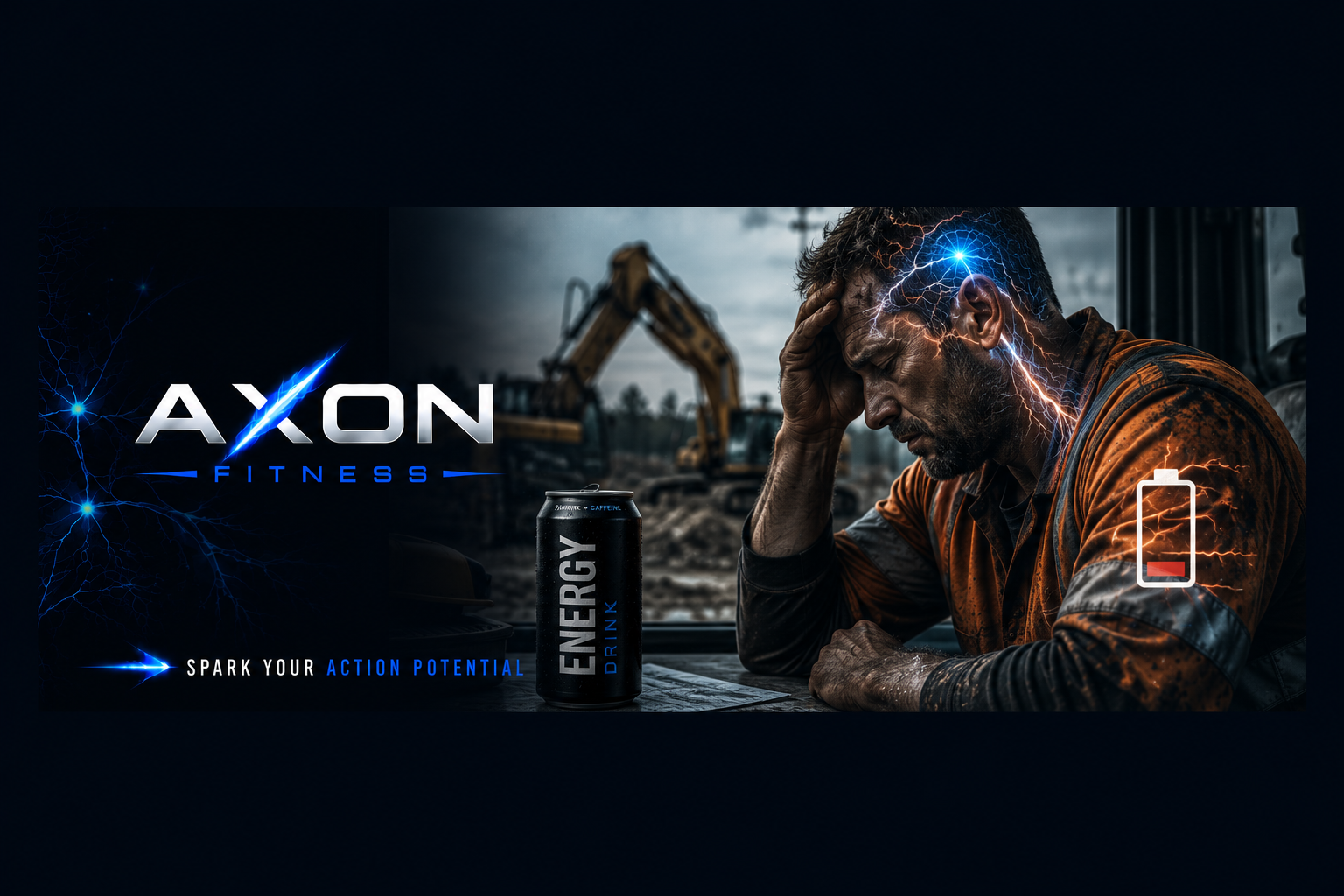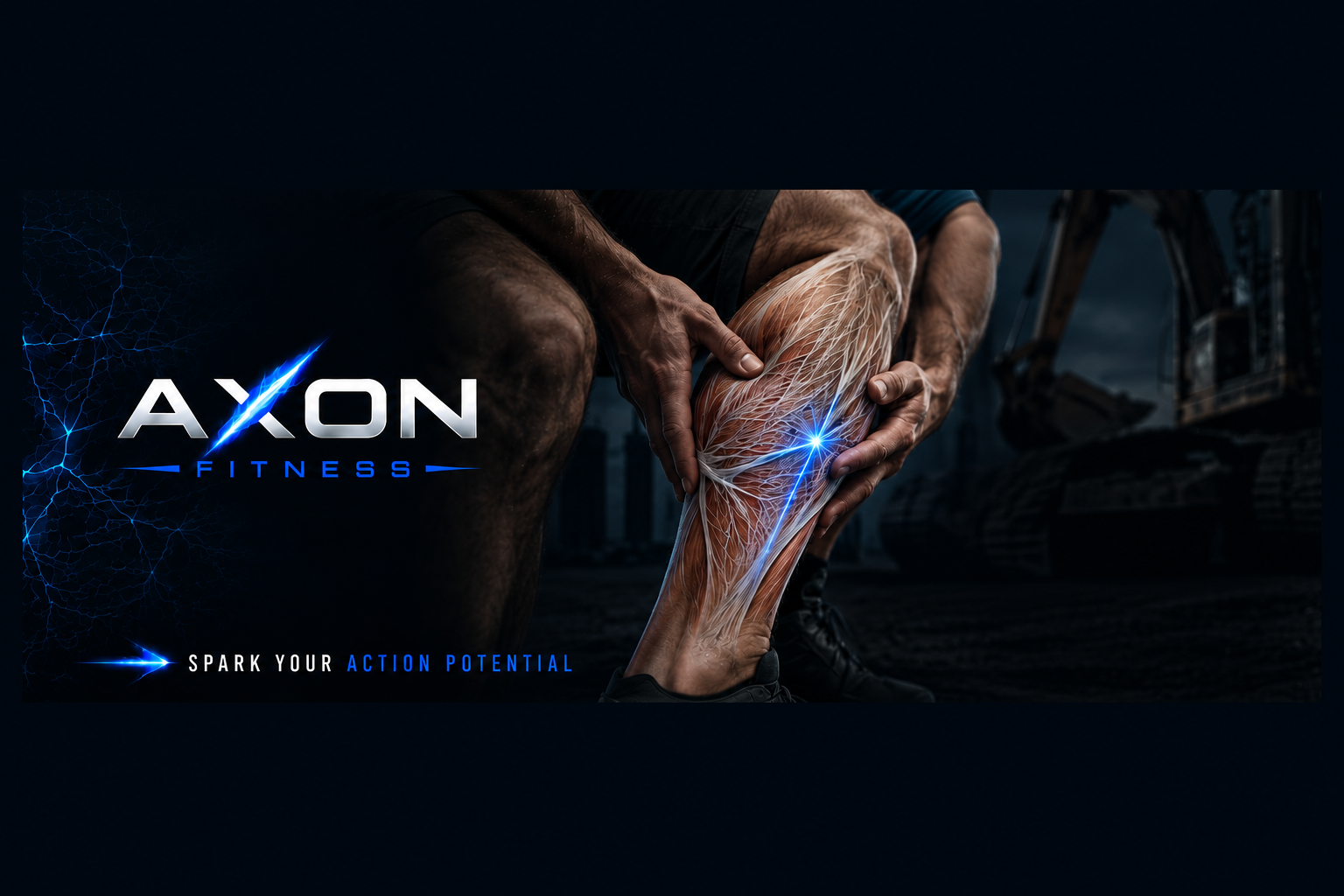
Category: Machine Operators

Advice for excavator, plant and machine drivers.

  • You Can Work Hard All Day… And Still Gain Weight

    You Can Work Hard All Day… And Still Gain Weight

    “I work ten hours a day… how am I still putting weight on?”

    It’s a question I’ve heard on construction sites for years.

    If you’re a machine operator, you leave home early, work long shifts and get home exhausted. So why does your waistline keep growing?

    The answer isn’t because you’re lazy.

    It’s because working hard and being physically active aren’t always the same thing.

    If you’ve worked in construction long enough, you’ve probably heard someone say it.

    “I’m working harder than I’ve ever worked… but I’m still putting weight on.”

    At first, it doesn’t make sense.

    You leave home before most people are awake.

    You battle through traffic.

    You spend ten hours on site.

    You get home physically and mentally drained.

    Then one day your trousers feel tighter.

    Your belt moves out another notch.

    You look in the mirror and wonder…

    “How can I be working this hard and still be getting fatter?”

    After spending over forty years in construction, I’ve heard that conversation more times than I can count.

    The problem is…

    Most people assume working hard automatically means being physically active.

    They’re not the same thing.

    Construction Isn’t One Job

    One of the biggest mistakes people make is thinking everyone in construction has the same physical workload.

    They don’t.

    A groundworker on the shovel…

    A hod carrier…

    A bricklayer…

    An excavator operator…

    A tower crane driver…

    All work in construction.

    But their bodies experience completely different demands.

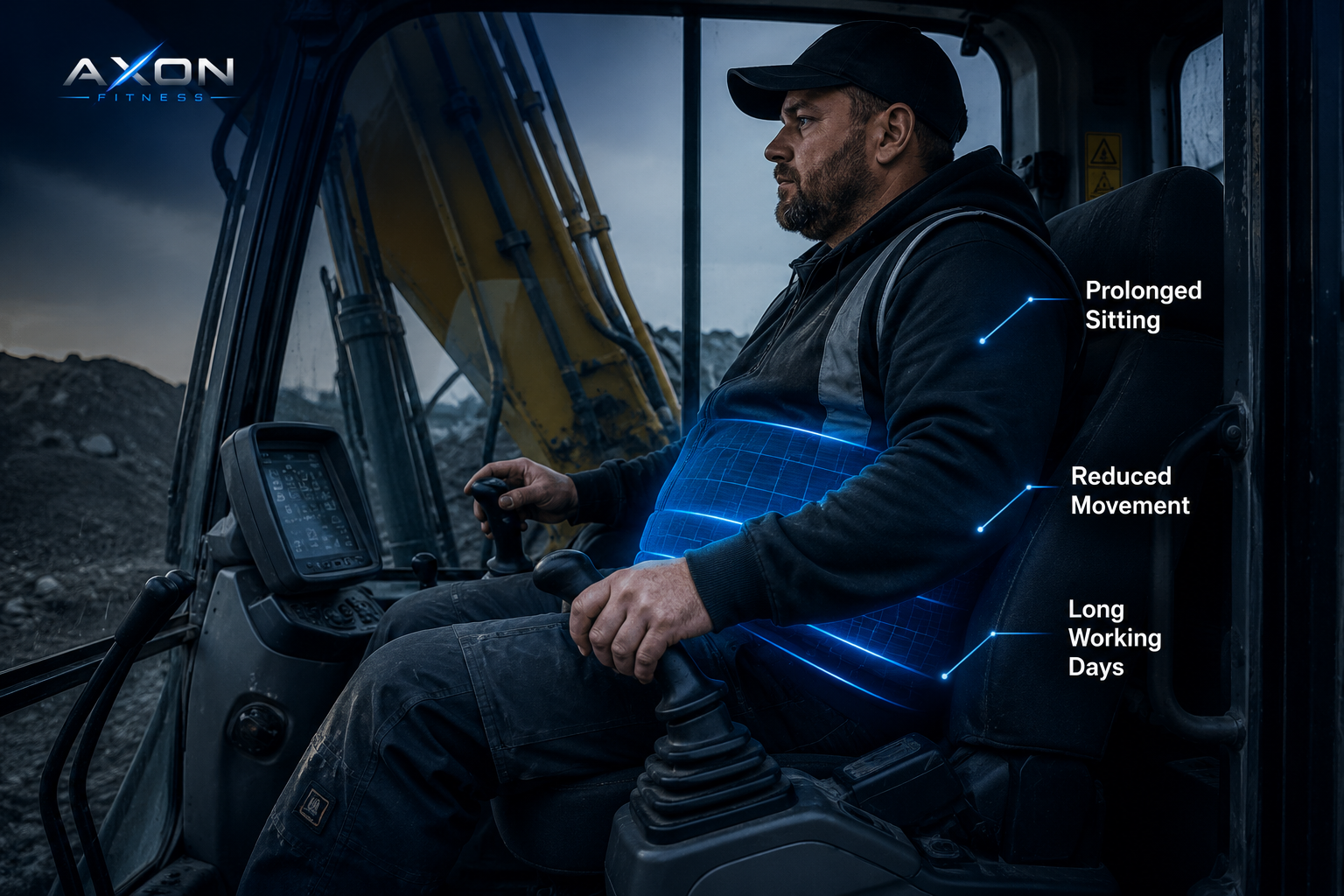
    If you’re operating an excavator, loading shovel, dozer or telehandler, you may spend eight to ten hours sitting in one position.

    You’re concentrating.

    You’re operating controls.

    You’re dealing with vibration.

    You’re making constant decisions.

    You’re tired.

    But you may not actually be moving very much.

    That’s a very different type of fatigue.

    Tired Doesn’t Always Mean Active

    This is one of the biggest myths I hear.

    “I’m shattered, so I must have burned loads of calories.”

    Not necessarily.

    You can be physically exhausted…

    Without being physically active.

    Driving machinery demands concentration.

    Your nervous system is constantly working.

    Your muscles stay switched on to stabilise your body.

    You’re exposed to vibration.

    You’re sitting in restricted positions for hours.

    By the end of the shift, you’re genuinely tired.

    But tired and active aren’t the same thing.

    This is one of the reasons I wrote Why Working Hard Isn’t the Same as Staying Fit, because they’re two completely different things.

    Read more: Why Working Hard Isn’t the Same as Staying Fit

    The Job Doesn’t Finish at 4:30

    The shift ends.

    The day doesn’t.

    Now comes the drive home.

    More sitting.

    More traffic.

    You finally walk through the front door.

    You’re exhausted.

    The last thing you feel like doing is cooking from scratch or going to the gym.

    So what happens?

    You grab whatever’s quickest.

    Sit down.

    Recover.

    Then tomorrow…

    You do it all again.

    Week after week.

    Month after month.

    Year after year.

    That’s how weight slowly creeps on.

    Not because you’ve suddenly become lazy.

    Because the environment makes it incredibly easy to move less than you realise.

    Sitting Changes More Than Your Waistline

    Long periods of sitting don’t just affect body weight.

    They can contribute to:

    • Stiff hips.
    • Tight hamstrings.
    • Reduced calorie expenditure.
    • Poor circulation.
    • Aching lower backs.
    • Reduced insulin sensitivity.
    • Lower overall daily movement.

    If you’ve already read Why Your Legs Feel Heavy After a Day in the Cab, you’ll know how sitting also affects blood flow and why small movement breaks matter.

    Read more: Why Your Legs Feel Heavy and Swollen After a Day in the Cab

    Research also shows that prolonged sedentary behaviour is associated with poorer metabolic health and an increased risk of weight gain, even in people who meet some exercise recommendations.

    External Reference:
    https://www.nhs.uk/live-well/exercise/why-sitting-too-much-is-bad-for-us/

    Don’t Rely on the Job to Keep You Fit

    This is probably the biggest lesson I’ve learnt.

    Construction pays the bills.

    It doesn’t automatically protect your health.

    Your employer pays you to do a job.

    Your machine is there to move earth.

    Neither one is responsible for keeping your body healthy.

    That’s your responsibility.

    It isn’t always easy.

    But it is possible.

    So What Can You Do?

    Forget perfection.

    Forget trying to train like someone who’s been sitting behind a desk all day.

    Your life is different.

    Start with realistic habits.

    Try to:

    • Strength train two or three times each week.
    • Prioritise protein at each meal.
    • Walk for ten minutes after your evening meal whenever possible.
    • Get out of the cab during safe breaks and move around.
    • Keep your bodyweight under control before small gains become large ones.

    Small changes repeated consistently are far more powerful than grand plans that only last two weeks.

    Challenge One Belief

    For the next week…

    Stop saying…

    “I work hard, so I must be burning loads of calories.”

    Instead ask yourself…

    “How much of my day am I actually moving?”

    Those are two completely different questions.

    How Axon Fitness Can Help

    Axon Fitness exists because I’ve lived the reality of construction.

    I’ve worked through freezing winters.

    I’ve worked through heatwaves.

    I’ve sat in traffic before and after long shifts.

    I’ve heard the same conversations on site for decades.

    “My back’s gone.”

    “I’m shattered.”

    “I’m putting weight on.”

    My job isn’t to pretend construction is easy.

    It’s to help you understand what it’s doing to your body and give you realistic ways to reduce the physical cost of earning a living.

    If you’re ready to start, download the Free Axon Fitness Driver Mobility Guide and take the first step towards feeling better on and off site.

    Free Guide:
    Free Axon Fitness Driver Mobility Guide

    Final Thoughts

    Construction is hard.

    Sometimes it’s freezing.

    Sometimes it’s thirty-three degrees.

    Sometimes you spend ten hours sitting in a machine.

    Sometimes you spend ten hours on your feet.

    Whatever your job…

    Don’t assume working hard automatically means you’re looking after your health.

    They’re not the same thing.

    The job already takes enough from you.

    Don’t let it quietly take your health as well.

    Disclaimer

    This article is for educational purposes only and should not replace personalised medical advice. If you’re concerned about your weight, health or any ongoing symptoms, speak to your GP or another qualified
  • Is Your Excavator Seat Working Against You?

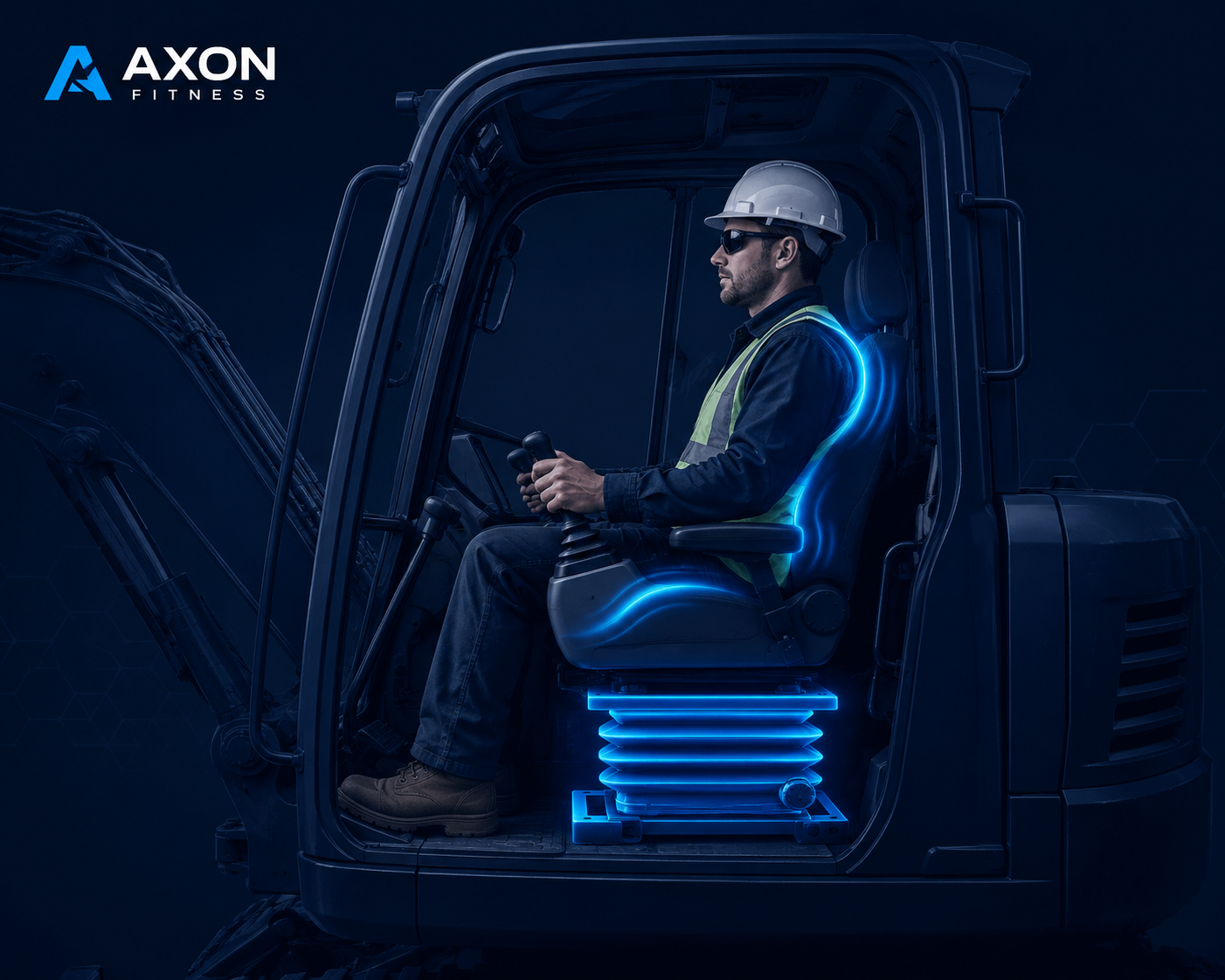
    Is Your Excavator Seat Working Against You?

    If you’ve ever climbed out of an excavator at the end of a shift with a stiff back, aching hips or a sore neck, it’s easy to blame the hours you’ve spent in the cab.

    Sometimes that’s true.

    But sometimes the problem isn’t just the amount of time you’ve been sitting.

    It’s how you’ve been sitting.

    Your excavator seat is designed to support you and reduce vibration, but if it isn’t adjusted correctly—or if you’re working in an older machine with limited adjustment—it could actually be increasing the strain on your body.

    The good news is that a few small changes can often make a noticeable difference over the course of a working day.

    Not Every Excavator Is the Same

    One thing that’s often overlooked is that not every operator has the luxury of a modern air-suspension seat with multiple adjustments.

    Some operators spend their day in brand-new machines with adjustable suspension, lumbar support and armrests.

    Others are working in:

    • Older excavators
    • Mini diggers with basic mechanical seats
    • Hire machines that have been used by dozens of different operators
    • Machines where the seat has seen better days

    Some older seats have little or no suspension adjustment.

    Others have worn cushions, poor lumbar support or armrests that no longer sit where they should.

    The reality is that many operators simply have to work with whatever machine they’re given.

    Why Your Seat Matters

    Your seat does far more than provide somewhere to sit.

    It’s the first line of defence between your body and the vibration travelling through the machine.

    If the suspension is adjusted correctly, it helps absorb some of that vibration before it reaches your spine.

    If it isn’t…

    Your body absorbs more of the impact instead.

    Over time, that can contribute to fatigue, discomfort and stiffness.

    If you haven’t already, it’s worth reading our article on How Cab Vibration Affects Your Body Over Time, which explains how repeated vibration places stress on the spine, joints and soft tissues throughout a working career.

    Read more: How Cab Vibration Affects Your Body Over Time

    Research has shown that long-term exposure to whole-body vibration is associated with an increased risk of lower back problems in occupational settings.

    External reference: https://www.hse.gov.uk/vibration/wbv/index.htm

    The Position You Repeat Becomes the Position Your Body Learns

    Think about how you sit in the cab.

    Do you always lean forwards slightly to reach the joysticks?

    Do you sit on one hip more than the other?

    Do you rest one elbow all day?

    Do you spend hours looking down into excavations?

    You may not even notice you’re doing it anymore.

    That’s because your nervous system has learnt those positions through repetition.

    As we explained in Why Your Body Holds On to Bad Movement Patterns, the body naturally repeats the movements and postures it practises most often.

    Read more: Why Your Body Holds On to Bad Movement Patterns

    The longer you repeat those positions, the more familiar they become—even if they’re contributing to stiffness.

    Small Adjustments Can Make a Big Difference

    Before starting work, take a minute to check your setup.

    Ask yourself:

    • Can I reach the joysticks without leaning forwards?
    • Are my shoulders relaxed?
    • Are my elbows comfortably supported?
    • Is my back against the backrest?
    • Can I comfortably reach the pedals?
    • Is the seat positioned correctly for my height?

    If your machine has adjustable suspension, make sure it’s set for your body weight.

    Many operators never touch this adjustment, yet it’s there for a reason.

    A suspension that’s too stiff won’t absorb enough vibration.

    One that’s too soft may bottom out over rough ground, sending more impact through your pelvis and lower back.

    What If Your Machine Has a Poor Seat?

    This is where many articles stop.

    They simply tell you to adjust the seat.

    But what if you can’t?

    If you’re working in an older mini digger or a machine with limited adjustment, you may have very few options.

    That doesn’t mean you’re powerless.

    You can still:

    • Sit back into the seat rather than perching on the edge.
    • Avoid constantly leaning forwards.
    • Change your posture whenever it’s safe to do so.
    • Get out of the cab during breaks and move around.
    • Build the strength and mobility that helps your body tolerate the demands of the job.

    The best seat in the world can’t compensate for a body that’s become weak, stiff or poorly conditioned.

    Likewise, even an older machine can often feel more comfortable when the operator has good mobility, strength and body awareness.

    Don’t Forget Your Upper Body

    Your seat isn’t just supporting your lower back.

    It influences everything above it.

    If you’re reaching for the controls all day because the seat is too far back, you’ll often compensate by rounding your shoulders and pushing your head forwards.

    Over time, those positions can contribute to neck stiffness and shoulder discomfort.

    If this sounds familiar, our article The Hidden Posture Problem Inside Every Excavator Cab explains how repeated cab positions gradually change the way your body moves.

    Read more: The Hidden Posture Problem Inside Every Excavator Cab

    A Simple Starting Point

    The next time you climb into your machine, don’t just start the engine and get to work.

    Take sixty seconds.

    Adjust the seat.

    Check your posture.

    Relax your shoulders.

    Sit back properly.

    That one minute could influence how your body feels after eight or ten hours in the cab.

    If you’d like more practical advice designed specifically for machine operators, download the free Axon Fitness Driver Mobility Guide here:

    Free Guide: Free Axon Fitness Driver Mobility Guide

    Axon Fitness 60-Second Seat Setup Checklist

    Before you start the engine tomorrow morning, run through these five quick checks:

    ✅ 1. Seat Position

    Can you reach the joysticks without leaning forwards?

    Your back should stay against the backrest while your elbows remain relaxed.

    ✅ 2. Suspension Setting (If Fitted)

    If your machine has adjustable seat suspension, set it for your body weight.

    Too stiff = more vibration travels through your body.

    Too soft = the suspension can bottom out over rough ground.

    ✅ 3. Backrest & Lumbar Support

    Adjust the backrest so you’re sitting upright and supported.

    Avoid slouching or perching on the front edge of the seat.

    ✅ 4. Armrests

    Your shoulders should stay relaxed.

    If you’re constantly reaching for the joysticks, your shoulders and neck will work harder than they need to.

    ✅ 5. Change Position During the Day

    Even with the perfect seat, your body isn’t designed to stay still for hours.

    Whenever it’s safe to do so:

    • Stand up.
    • Walk around.
    • Stretch your hips.
    • Move your shoulders.
    • Pump your calves before climbing back into the cab.

    Small movements repeated throughout the day help reduce stiffness and improve circulation.

    How Axon Fitness Can Help

    At Axon Fitness, we help machine operators build strength, mobility and resilience around the realities of long shifts, vibration, restricted movement and repetitive work.

    The goal isn’t bodybuilding.

    It’s staying strong, mobile and capable so you can continue doing the job you enjoy for years to come.

    To learn more about fitness for machine operators, visit the Machine Operators page:

    Fitness for Machine Operators and Plant Drivers

    The Bottom Line

    You don’t always get to choose the machine you work in.

    You don’t always get a brand-new seat with every adjustment imaginable.

    But you can take a minute to set yourself up properly.

    Small improvements repeated every day add up over the course of a career.

    Your seat supports your body.

    Make sure it’s helping you—not working against you.

    Disclaimer

    This article is for general education only and is not medical advice. If you have ongoing pain, numbness or symptoms that concern you, speak to a qualified healthcare professional.

  • Why Your Body Holds On to Bad Movement Patterns

    Why Your Body Holds On to Bad Movement Patterns

    Have you ever stretched your hips, loosened your shoulders or felt great after a mobility session…

    …only to wake up the next morning feeling just as stiff again?

    If so, you’re not alone.

    Many people think their muscles are simply “tight.”

    In reality, something much more interesting is happening.

    Your body has learnt how to move.

    The problem is that it has spent months—or even years—learning movements that suit your working life rather than your long-term health.

    For machine operators, truck drivers, tradespeople and anyone over 40, this is one of the biggest reasons stiffness keeps returning.

    Your body isn’t trying to work against you.

    It’s simply repeating the movement patterns it knows best.

    Why This Matters

    Every day your nervous system is collecting information.

    How you sit.

    How you walk.

    How you climb into your machine.

    How you bend.

    How you lift.

    How you drive.

    How you stand.

    Every repetition strengthens a movement pattern.

    Think about learning to drive a car.

    At first every gear change feels awkward.

    Eventually you don’t even think about it.

    The movement has become automatic.

    Exactly the same thing happens with your posture.

    Exactly the same thing happens with the way you squat, reach, bend, walk and sit.

    Your nervous system is constantly asking one question:

    “What’s the easiest way I’ve done this before?”

    Not…

    “What’s the healthiest way?”

    That’s a huge difference.

    At Axon Fitness we often say:

    The body adapts to the life you live.

    This is one of the reasons why.

    What Is Happening Inside Your Body?

    Your brain controls movement through your nervous system.

    Every time you repeat a movement, your brain becomes slightly better at performing it.

    Scientists call this motor learning.

    As movements become more familiar, they require less conscious thought and less energy.

    That’s incredibly useful.

    It allows you to walk, drive, climb stairs and operate machinery without constantly thinking about every movement.

    But there’s a downside.

    If you repeat poor positions often enough…

    …they also become automatic.

    That’s why an excavator operator who spends thousands of hours sitting with rounded shoulders and looking down into trenches will often find that position feels “normal.”

    The same applies to someone who always stands with more weight on one leg or sits twisted in the driver’s seat.

    Your nervous system has simply learnt that pattern.

    Research into motor learning and neuroplasticity shows that the nervous system continually adapts to repeated movement and practice throughout life.

    External reference (PubMed): https://pubmed.ncbi.nlm.nih.gov/?term=motor+learning+neuroplasticity

    Why Stretching Often Doesn’t Last

    This surprises a lot of people.

    They stretch.

    Everything feels looser.

    Then a few hours later…

    …they’re tight again.

    Why?

    Because stretching changes how a muscle feels for a short period.

    It doesn’t automatically change the movement programme stored inside your nervous system.

    If you’ve spent twenty years climbing into an excavator the same way…

    …your brain will usually guide you straight back to that familiar pattern.

    Not because it’s the best movement.

    Because it’s the movement it trusts.

    That’s why stretching alone often isn’t enough.

    Your Body Prefers Familiar, Not Perfect

    Your nervous system isn’t trying to create perfect posture.

    It’s trying to create efficient movement.

    If you’ve repeated something thousands of times, your brain assumes it’s safe.

    Even when it isn’t ideal.

    That’s why changing posture can feel awkward.

    It feels unfamiliar.

    Many people stop because they think the new movement feels wrong.

    In reality…

    It often just feels different.

    Signs You May Notice

    You might recognise some of these:

    • Your shoulders round forwards without thinking.
    • You always cross the same leg.
    • You always lean onto one hip.
    • You struggle to stand tall for long.
    • Your neck drifts forwards when working.
    • Your hips tighten again shortly after stretching.
    • One side of your body always feels stiffer than the other.

    These aren’t signs that you’re broken.

    They’re signs that your nervous system has become very efficient at repeating the same movement pattern.

    How Do You Change It?

    Here’s the good news.

    Your nervous system can learn new movement patterns at any age.

    But it needs repetition.

    Think of it like creating a new footpath across a field.

    The old path is well worn.

    The new one barely exists.

    Walking the new path once won’t make much difference.

    Walking it every day eventually creates a completely new route.

    Movement works the same way.

    You replace an old pattern by repeatedly practising a better one.

    Strength Makes New Movements Stick

    This is where many mobility programmes fall short.

    Mobility creates access to movement.

    Strength teaches your body how to use it.

    If you improve your hip mobility but never strengthen those new positions…

    …your body usually returns to what it already knows.

    That’s why Axon Fitness combines mobility with practical strength training.

    The goal isn’t to become more flexible for one afternoon.

    The goal is to build movement your body can trust every day.

    If you’ve read our article The Hidden Posture Problem Inside Every Excavator Cab, you’ll already know how repeated working positions shape your posture over time.

    Read more: The Hidden Posture Problem Inside Every Excavator Cab

    Likewise, our article on How Cab Vibration Affects Your Body Over Time explains how vibration adds another layer of stress to these long-established movement patterns.

    Read more: How Cab Vibration Affects Your Body Over Time

    A Simple Starting Point

    Don’t try to change everything.

    Choose one movement.

    Practise it every day.

    Stand taller.

    Walk differently.

    Strengthen your upper back.

    Improve your hip control.

    Repeat.

    Your nervous system learns through consistency—not perfection.

    If you’d like a practical routine designed around long shifts and working life, download the free Axon Fitness Driver Mobility Guide here:

    Free Axon Fitness Driver Mobility Guide

    How Axon Fitness Can Help

    At Axon Fitness, we help machine operators, tradespeople and adults over 40 build strength and mobility around the realities of work.

    Long hours in the cab.

    Restricted movement.

    Commuting.

    Fatigue.

    The aim isn’t bodybuilding.

    It’s staying strong, mobile and capable for the long term.

    If you’d like practical advice built around your working life, visit our Machine Operators page:

    Fitness for Machine Operators and Plant Drivers

    The Bottom Line

    Your body isn’t stubborn.

    It isn’t broken.

    It’s simply very good at repeating what it has practised.

    The encouraging news is that the same nervous system which learnt poor movement patterns can also learn better ones.

    With consistent mobility, targeted strength training and repeated practice, you can gradually teach your body a new way to move.

    Small improvements repeated every day are what create lasting change.

    Disclaimer

    This article is for general education only and is not medical advice. If you have ongoing pain, numbness, weakness or symptoms that concern you, speak to a qualified healthcare professional. For more information about musculoskeletal health and staying active, see NHS guidance on muscle, bone and joint health.

    External reference (NHS): https://www.nhs.uk/live-well/exercise/

  • The Hidden Posture Problem Inside Every Excavator Cab

    The Hidden Posture Problem Inside Every Excavator Cab

    When most people think about the physical demands of operating an excavator, they think about stiff hips, sore backs or sitting down all day.

    Those are certainly part of the picture.

    But there is another problem developing quietly inside almost every machine cab.

    Your posture.

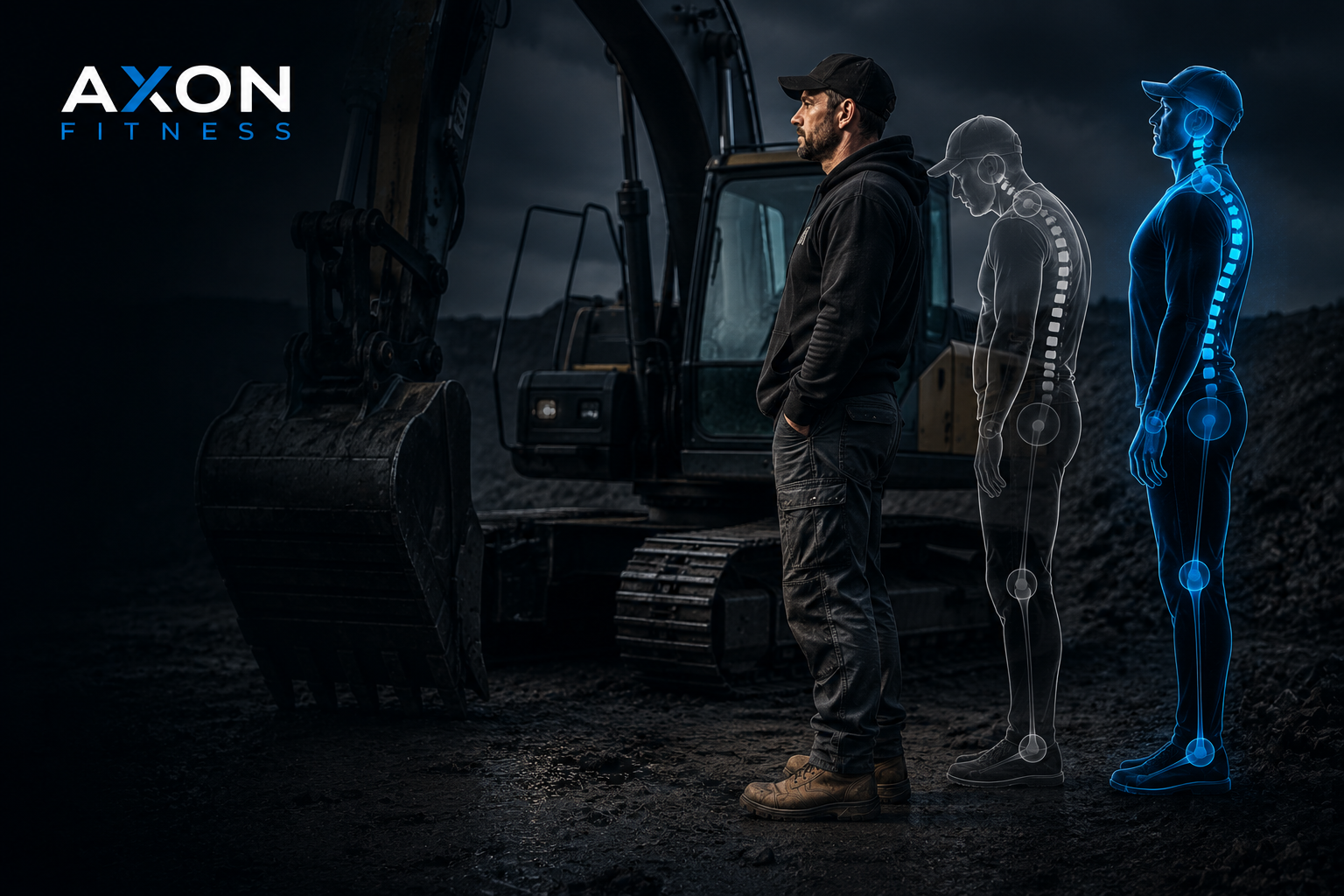
    More specifically, the way your body gradually adapts to spending thousands of hours sitting above your work while constantly looking down.

    Unlike many jobs, excavator operators spend the majority of the working day in an elevated position. Whether you’re trenching, grading, loading, lifting or trimming, your eyes are almost always focused below the horizon.

    That repeated position might seem insignificant during one shift.

    Over ten or twenty years, it becomes one of the biggest influences on how your body moves.

    Why This Matters

    The human body is remarkably adaptable.

    Whatever position you spend the most time in eventually becomes the position your body considers normal.

    For excavator operators, that often means:

    • Your head gradually moves forwards.
    • Your shoulders begin to round.
    • Your upper back becomes stiffer.
    • Your chest muscles shorten.
    • Your neck muscles work harder simply to hold your head upright.

    This isn’t because your body is failing.

    It’s because your body is adapting to the demands you repeatedly place upon it.

    At Axon Fitness we often say:

    The body adapts to the life you live.

    For machine operators, that adaptation is heavily influenced by long hours inside the cab.

    If you’ve already read our article on How Cab Vibration Affects Your Body Over Time, you’ll know that vibration and restricted movement place additional stress on your spine and joints. When poor posture is added to that combination, the cumulative effect can become significant.

    Read more: How Cab Vibration Affects Your Body Over Time

    What Is Happening Inside Your Body?

    Imagine a straight line running through your ear, shoulder and hip.

    That is where your head is designed to sit.

    Now picture spending eight to ten hours every day looking down towards the bucket.

    Without realising it:

    • your chin drifts forwards
    • your upper back rounds slightly
    • your shoulders roll forwards
    • your chest tightens
    • the muscles between your shoulder blades become weaker

    Meanwhile, the muscles at the back of your neck have to work continuously just to stop your head falling further forwards.

    Your head weighs around 4–6 kg.

    Move it just a few centimetres forward and the load placed on your neck increases dramatically.

    Over months and years, this repeated strain can contribute to persistent stiffness, muscular fatigue and reduced movement.

    Signs You May Notice

    Many operators assume these symptoms are simply part of getting older.

    Often, they are simply signs that your body has adapted to prolonged cab work.

    You might notice:

    • Neck stiffness first thing in the morning.
    • Tight shoulders after work.
    • Difficulty turning your head when reversing.
    • Headaches beginning at the base of the skull.
    • Upper back tightness between the shoulder blades.
    • A rounded posture in photographs.
    • Feeling “stooped” after climbing out of the machine.

    The earlier you recognise these changes, the easier they are to address.

    It’s Not Just the Machine—It’s the Time

    One awkward movement rarely causes a problem.

    Thousands of repeated movements usually do.

    Every shift involves hundreds of small postural adjustments:

    Looking into trenches.

    Watching the bucket.

    Checking grades.

    Monitoring ground workers.

    Looking through mirrors and side windows.

    None of these positions are harmful on their own.

    The issue is that they are repeated day after day, year after year.

    The Health and Safety Executive (HSE) identifies prolonged awkward postures and repetitive working positions as important contributors to work-related musculoskeletal disorders.

    External reference: https://www.hse.gov.uk/msd/

    Why Mobility Alone Isn’t Enough

    Many people try stretching their neck when it becomes stiff.

    That can help temporarily.

    But lasting improvements usually come from restoring strength as well as movement.

    Think of posture as a balance.

    The front of the body often becomes tighter.

    The muscles supporting the upper back often become weaker.

    Improving both mobility and strength helps restore that balance.

    This is one reason structured strength training becomes increasingly important after forty.

    If you’re over forty, our article Why Strength Training Matters More After 40 Than Ever Before explains why maintaining muscle is one of the best long-term investments you can make for your health.

    Read more: Why Strength Training Matters More After 40 Than Ever Before

    What You Can Do About It

    You don’t need to spend hours in the gym.

    Small habits performed consistently usually make the biggest difference.

    Aim to:

    • Change position whenever it is safe to do so.
    • Perform gentle neck movements during breaks.
    • Open the chest with doorway stretches.
    • Strengthen the muscles between the shoulder blades.
    • Improve thoracic spine mobility.
    • Include rowing movements in your strength training.
    • Train your core and glutes regularly.

    Even two or three minutes of movement before driving home can reduce the stiffness that accumulates throughout the day.

    If you’ve also experienced heavy or swollen legs after sitting all day, our article on Why Your Legs Feel Heavy After a Day in the Cab explains how prolonged sitting affects circulation and what you can do about it.

    Read more: Why Your Legs Feel Heavy and Swollen After a Day in the Cab

    A Simple Starting Point

    You don’t need a complicated programme.

    Start by restoring the movements your body gradually loses.

    A few minutes each day is often far more effective than doing nothing all week and then trying to make up for it at the weekend.

    If long hours in the cab are leaving you stiff, download the free Axon Fitness Driver Mobility Guide. It’s designed specifically for machine operators and includes simple routines you can use before work, during breaks and after your shift.

    Free Guide: Free Axon Fitness Driver Mobility Guide

    How Axon Fitness Can Help

    Axon Fitness specialises in helping machine operators build strength, mobility and long-term resilience around the demands of real working life.

    This isn’t bodybuilding.

    It isn’t about spending hours in the gym.

    It’s about staying strong, mobile and capable so you can continue doing the job you enjoy with less stiffness, fewer aches and better movement.

    To learn more about fitness designed specifically for machine operators, visit the Machine Operators page.

    Read more: Fitness for Machine Operators and Plant Drivers

    The Bottom Line

    Your excavator probably isn’t causing your neck pain on its own.

    It’s the thousands of hours spent in the same position that gradually change how your body moves.

    The good news is that adaptation works both ways.

    With regular movement, appropriate strength training and simple daily mobility, you can begin teaching your body a healthier pattern again.

    Small changes, repeated consistently, are what protect your body over the course of a career.

    Disclaimer

    This article is for general education only and is not medical advice. If you have ongoing pain, numbness, weakness or symptoms that concern you, speak to a qualified healthcare professional. Research also supports staying active and improving movement for many common causes of neck pain rather than prolonged rest where appropriate.

    Further reading: NHS – Neck pain and stiff neck
    https://www.nhs.uk/conditions/neck-pain-and-stiff-neck/

  • Seated Calf Pumps for Drivers: How They Can Help Blood Flow After Eating

    Seated Calf Pumps for Drivers: How They Can Help Blood Flow After Eating

    If you spend most of your day sitting in a cab, your lower legs are not doing much.

    Your hips are bent.

    Your knees are bent.

    Your ankles barely move.

    Your calves are quiet.

    And if you have just eaten, your body is also dealing with digestion, blood flow and the normal rise in blood sugar that comes after a meal.

    This is where a simple seated calf pump can be useful.

    It is not a magic exercise.

    It is not a cure for diabetes.

    It will not replace walking, strength training, proper food choices or medical care.

    But for machine operators, truck drivers and anyone who spends long hours sitting, pumping the calves while seated can be a practical way to support blood flow through the legs and may help the body handle post-meal glucose better.

    Small movement still counts.

    Especially when the alternative is sitting completely still for hours.

    Why Sitting Still Is A Problem For Drivers

    When you are sitting for long periods, the muscles in your lower legs are not contracting much.

    That matters because your calf muscles help move blood back up from the lower legs towards the heart.

    The heart pumps blood out.

    But the legs need muscle contraction to help push blood back up.

    That is why the calves are often called a kind of “second pump” for the body.

    If you sit still for hours, especially in a cab, blood flow through the legs can become more sluggish.

    You may notice:

    • heavy legs
    • swollen ankles
    • tight calves
    • restless legs
    • cold feet
    • stiffness when climbing out
    • lower-leg ache after a long shift
    • feeling like your legs need a walk before they wake up

    This is not unusual for drivers and machine operators.

    The job itself limits movement.

    You are not walking around freely.

    You are sitting, concentrating, operating controls, watching the job and trying to stay comfortable in a position that was never designed for long-term health.

    The NHS advises not sitting still for long periods and getting up to move around regularly where possible. The British Heart Foundation also suggests small movements like wriggling the toes or rotating the ankles if you have been sitting for a long time.

    Useful external reading:

    NHS guidance on DVT and long periods sitting

    British Heart Foundation advice on circulation

    What Is A Seated Calf Pump?

    A seated calf pump is simple.

    You sit with your feet flat on the floor.

    Keep the front of the foot down.

    Lift your heels up.

    Squeeze the calves gently.

    Lower the heels back down.

    Repeat.

    It looks basic, but it gets the lower-leg muscles contracting.

    You can do it under a desk, in a break room, in a van when parked, at home after food, or during a break on site.

    For machine operators, the key point is this:

    Do not do anything that affects safe machine control.

    If your feet are needed for pedals, controls or safe operation, leave it alone until you are stopped, parked or on a proper break.

    Movement is useful.

    Safety comes first.

    Why The Soleus Muscle Matters

    The calf is not just one muscle.

    One of the key muscles is the soleus.

    The soleus sits deeper in the calf and is active during standing, walking and certain seated heel-raise movements.

    Research on the “soleus push-up” has attracted attention because it showed that targeted seated activation of the soleus could raise muscle metabolism for long periods and improve post-meal glucose and insulin responses under study conditions.

    You can read the research summary here:

    PubMed: Soleus oxidative metabolism and glucose regulation

    This does not mean every casual calf pump gives the same result as a controlled laboratory study.

    That matters.

    The study movement was specific.

    The technique was controlled.

    The results should not be turned into a social media claim that “calf raises fix blood sugar.”

    But the practical idea is still useful:

    Contracting muscles while seated is better than sitting completely still.

    And the lower legs are a simple place to start.

    How Calf Pumps May Help Blood Flow

    Every time you lift and lower the heels, the calf muscles contract and relax.

    That squeezing action can help support venous return, which is the movement of blood back from the legs towards the heart.

    This is one reason hospitals sometimes use calf or foot pumps for people who are sitting still or lying down. These devices provide pressure to increase blood flow out of the legs.

    Useful external reading:

    Guy’s and St Thomas’ NHS Foundation Trust: calf or foot pumps and blood flow

    For drivers, the everyday version is simple movement.

    Not medical equipment.

    Not treatment.

    Just using your own muscles so your legs are not completely switched off for hours.

    This is especially useful after long periods sitting, after eating, or before you climb out of the cab and expect your legs to work properly.

    What About Glucose After Eating?

    After you eat, especially after a meal containing carbohydrates, blood glucose naturally rises.

    That is normal.

    The body then uses insulin and muscle activity to help move glucose from the blood into tissues where it can be used or stored.

    Walking after meals is one of the simplest ways to help with this.

    But drivers and operators cannot always go for a walk straight after eating.

    You might be in the cab.

    You might be on site.

    You might be in the van.

    You might be waiting, watching, or parked up with limited space.

    That is where seated calf pumping may have a place.

    It is not as good as a proper walk.

    It is not a replacement for training.

    But it may give the body some muscular activity at a time when you would otherwise be completely still.

    For a driver who eats lunch and then sits straight back down for hours, that is worth thinking about.

    When To Use Calf Pumps

    Good times to use them include:

    • after meals when seated
    • during breaks
    • when parked safely
    • at home after dinner
    • during long periods at a desk
    • before driving home after a shift
    • after long commutes
    • when your legs feel heavy or stiff

    A simple starting point:

    Do 30–60 seconds of seated calf pumps.

    Rest.

    Repeat for 2–5 minutes.

    If you are sitting for a long stretch, repeat this every 20–30 minutes when possible.

    You do not need to hammer them.

    The aim is steady movement, not calf cramp.

    How To Do Them Properly

    Sit tall if possible.

    Keep both feet flat.

    Keep the balls of the feet on the floor.

    Lift the heels up.

    Pause briefly at the top.

    Lower the heels under control.

    Repeat smoothly.

    Avoid bouncing aggressively.

    Avoid forcing the movement if you have pain.

    If you feel cramp, back off.

    If you have an ankle injury, calf injury, circulation condition, diabetes complications, nerve symptoms, swelling or a history of blood clots, speak to a qualified health professional before relying on this as a strategy.

    Calf Pumps Are A Tool, Not The Whole Plan

    This is important.

    Seated calf pumps are useful, but they are not enough on their own.

    Drivers and machine operators still need:

    • regular walking where possible
    • good hydration
    • enough protein
    • strength training
    • hip mobility
    • glute strength
    • proper recovery
    • better movement outside work
    • sensible food choices

    The calf pump is a small tool.

    It helps break the pattern of sitting completely still.

    But the bigger goal is to build a body that can handle long hours sitting, driving, operating and working without slowly losing strength and mobility.

    If you struggle with heavy legs after long hours in the cab, this related Axon Fitness article may help:

    Why Your Legs Feel Heavy and Swollen After a Day in the Cab

    You may also find this useful:

    You Sit for 16 Hours a Day. Here’s What That’s Doing to Your Body

    A Simple Post-Meal Driver Routine

    If you have just eaten and you know you are about to sit again, try this:

    • 2 minutes easy walking if you can
    • 2 minutes seated calf pumps
    • 10 ankle circles each way
    • 10 gentle toe raises
    • drink some water
    • stand up again within the next hour if possible

    If you cannot walk, just use the seated movements.

    Something is better than sitting frozen.

    Small movements repeated daily can have a big effect over time because they interrupt the pattern that causes the problem.

    Free Download

    If long hours sitting are leaving your legs heavy, your hips tight or your back stiff, start with the free Axon Fitness mobility guide here:

    Free Axon Fitness Driver Mobility Guide

    It gives you five simple mobility fixes designed for machine operators and drivers, and it takes less than five minutes to use.

    How Axon Fitness Can Help

    Axon Fitness helps machine operators, plant drivers, truck drivers, tradespeople and adults over 40 stay strong, mobile and capable for the long term.

    The goal is not bodybuilding.

    The goal is practical strength, mobility, circulation, recovery and injury prevention built around real working life.

    If your job keeps you sitting for long hours and your body is starting to feel it, the Machine Operators page explains how Axon Fitness supports drivers with practical strength and mobility advice:

    Fitness for Machine Operators & Plant Drivers

    Disclaimer

    This article is for general education only and is not medical advice. If you have ongoing pain, numbness, swelling, chest symptoms, diabetes, circulation problems, or a medical condition, speak to a qualified health professional.

  • Mini Digger Driving: Why Small Machines Can Still Wreck Your Back and Hips

    Mini Digger Driving: Why Small Machines Can Still Wreck Your Back and Hips

    Mini digger driving might not look as heavy on the body as bigger machine work.

    You are not climbing into a huge excavator.

    You are not sitting high up in a large cab.

    You might only be on a small machine, working in gardens, tight sites, narrow access areas, footings, drainage runs, services, landscaping or small groundworks.

    But if you drive mini diggers regularly, you already know the truth.

    Small machines can still leave you stiff, sore and locked up.

    Your lower back tightens.

    Your hips feel jammed.

    Your neck and shoulders get tense.

    Your legs feel heavy when you climb out.

    And after a long day, it can take a few minutes before you feel like you are moving properly again.

    That is not just age.

    That is your body adapting to the position and stress you keep putting it under.

    Small Machine Does Not Mean Small Stress

    A mini digger can be hard on the body because everything is more compact.

    The seat is often smaller.

    The leg room is limited.

    The controls are close.

    You are constantly looking around you.

    You may be twisting through your neck and upper back all day.

    You are often working on rough, uneven or soft ground.

    And depending on the machine, the seat and suspension may not give much support.

    The Health and Safety Executive explains that whole-body vibration can be transmitted through the seat or feet of workers who drive mobile machines over rough or uneven surfaces. It also notes that shocks and jolts from earth-moving machinery are associated with back pain.

    You can read the HSE guidance here: HSE whole-body vibration at work

    This matters because mini digger driving is not just sitting.

    You are sitting, bracing, concentrating, twisting, operating controls, absorbing vibration and trying to keep your body stable while the machine moves underneath you.

    That adds up.

    Why Mini Digger Drivers Get So Stiff

    The main problem is repeated position.

    When you sit in a mini digger for long periods, the hips stay bent.

    The knees stay bent.

    The ankles barely move.

    The spine often rounds forward.

    The shoulders can creep up.

    The neck keeps turning to check the bucket, the trench, the banksman, the skip, the dumper, the wall, the fence, the services or whatever else is around you.

    Over time, the body gets good at the position you keep using.

    That is useful for doing the job.

    But it can become a problem when your body starts losing the movement you are not using.

    Your hips stop opening properly.

    Your glutes do less work.

    Your lower back starts taking more of the load.

    Your upper back stiffens.

    Your neck and shoulders hold tension.

    Then when you climb out of the machine, your body has to move from a cramped working position back into standing, walking, lifting, carrying or driving home.

    That change can feel rough.

    The Signs You May Notice

    Mini digger drivers may notice:

    • stiffness when climbing out of the cab
    • lower back tightness after a shift
    • hips feeling locked or pinched
    • tight hamstrings or calves
    • neck tension from looking around all day
    • shoulders feeling raised or tense
    • glutes feeling inactive or weak
    • discomfort after the drive home
    • stiffness that is worse the next morning
    • feeling older than you should when getting moving

    A lot of operators ignore these signs because they can still do the job.

    But that does not mean the body is coping well.

    It often means the body is compensating.

    Why The Lower Back Takes The Hit

    The lower back often becomes the part that complains first.

    But it is not always the real starting point.

    If the hips are tight, the lower back usually has to move more.

    If the glutes are weak or switched off from long sitting, the lower back often works harder to stabilise the pelvis.

    If the upper back is stiff, the lower back may twist more than it should.

    If the seat is poor, your spine may sit under pressure all day.

    Add vibration, jolts and restricted movement, and the lower back can start feeling like it is taking the whole job.

    This is why random stretching is not always enough.

    You need mobility, but you also need strength.

    Especially through the glutes, trunk, hips and upper back.

    If you have not already read it, this related Axon Fitness article goes deeper into the same issue: Why Your Hips Feel Tight After a Day in the Cab

    You may also find this useful: How Cab Vibration Affects Your Body Over Time

    Mini Diggers Often Force Awkward Working Positions

    With larger machines, you may have more space and better seating.

    With mini diggers, the work is often tight.

    You might be up against walls, fences, buildings, trenches, skips, kerbs or services.

    That means more awkward angles.

    More looking over one shoulder.

    More small adjustments.

    More bracing.

    More stop-start movement.

    More getting in and out.

    More working around limited room.

    This is one of the reasons mini digger work can feel more draining than it looks.

    The machine is smaller, but the body still has to manage long hours of concentration, vibration and restricted movement.

    What You Can Do About It

    You do not need a complicated routine.

    You need a few simple habits done consistently.

    1. Move Before You Feel Stiff

    Do not wait until your back has already locked up.

    When you get a short break, stand up.

    Walk for a minute.

    Open the hips.

    Move the ankles.

    Roll the shoulders.

    Turn the upper back gently.

    Even small breaks can help reduce the build-up of stiffness across the day.

    2. Open The Hips After Driving

    After a shift, your hips have been bent for hours.

    A simple hip flexor stretch, glute stretch or deep supported squat position can help your body move back towards standing properly.

    Do not force it.

    The goal is not to smash the stretch.

    The goal is to remind the hips that they still need to open.

    3. Strengthen Your Glutes And Core

    Mini digger drivers need more than stretching.

    They need strength that supports the position they work in.

    Useful exercises include:

    • glute bridges
    • split squats
    • step-ups
    • Romanian deadlifts
    • cable rows
    • side planks
    • farmer carries
    • controlled squats

    These build the muscles that help support the hips, spine and posture.

    You do not need to train like a bodybuilder.

    You need practical strength that carries over into real working life.

    4. Keep The Upper Back Moving

    A stiff upper back often makes the neck and lower back work harder.

    Simple movements like thoracic rotations, band pull-aparts, rows and wall slides can help keep the upper body moving better.

    This matters for mini digger drivers because the job involves constant checking, looking around and controlling the machine from a seated position.

    5. Set The Seat As Best You Can

    You cannot always make a poor seat perfect.

    But you can still check the basics.

    Try to avoid sitting too rounded for the whole day.

    Keep your feet supported where possible.

    Avoid perching on the edge of the seat all day.

    Adjust the seat position when you can.

    If the machine is rough, old or uncomfortable, be even more disciplined with movement breaks.

    The worse the cab position, the more important your recovery habits become.

    A Simple Starting Point

    Here is a simple five-minute reset you can use after work or during the day when possible:

    • 60 seconds walking
    • 30 seconds hip flexor stretch each side
    • 10 bodyweight squats
    • 10 glute bridges
    • 10 shoulder rolls
    • 5 gentle upper-back rotations each side

    That is not a full programme.

    It is a starting point.

    The aim is to break the pattern of sitting, bracing and stiffening up all day.

    For more practical support, you can also read: Stretches for Machine Operators: Reduce Stiffness and Back Pain in the Cab

    When To Get Checked

    Most stiffness from machine work builds gradually and can often improve with better movement, strength and recovery habits.

    But do not ignore serious symptoms.

    The NHS advises getting urgent help for back pain if it is severe and worsening quickly, or if there is numbness, tingling, weakness in both legs, changes in bladder or bowel control, chest pain, or pain after a serious accident.

    You can read the NHS guidance here: NHS back pain advice

    If something feels wrong, get it checked properly.

    Pushing through everything is not strength.

    Sometimes the strong move is dealing with the problem early.

    Free Download

    If long hours in the mini digger are leaving your hips tight, your back stiff or your body feeling older than it should, start with the free Axon Fitness mobility guide here:

    Free Axon Fitness Driver Mobility Guide

    It gives you five simple mobility fixes designed for machine operators and drivers, and it takes less than five minutes to use.

    How Axon Fitness Can Help

    Axon Fitness helps machine operators, plant drivers, tradespeople and working adults over 40 stay strong, mobile and capable for the long term.

    The goal is not bodybuilding.

    The goal is helping your body handle the work you actually do.

    If mini digger driving is leaving you stiff, tight or sore, the Machine Operators page explains how Axon Fitness supports drivers with practical strength, mobility and injury prevention built around real working life:

    Fitness for Machine Operators & Plant Drivers

    Disclaimer

    This article is for general education only and is not medical advice. If you have ongoing pain, numbness, swelling, chest symptoms, or a medical condition, speak to a qualified health professional.

  • Why Machine Operators Need Strong Glutes

    Why Machine Operators Need Strong Glutes

    Most machine operators think their lower back is the problem.

    The stiffness.

    The aching.

    The feeling that it takes a few minutes to straighten up after getting out of the cab.

    But often the lower back is only part of the story.

    The real problem may be that one of the most important muscle groups in the body has gradually stopped doing its job.

    Your glutes.

    Key Takeaways

    • Long hours sitting in machinery can reduce glute activation over time.
    • Weak glutes often contribute to lower back tightness, hip discomfort and poor movement.
    • Strong glutes help support balance, posture and lower body strength.
    • Strength training helps maintain muscle, mobility and long-term physical capability.
    • Small amounts of regular movement are often more effective than occasional hard efforts.
    • Looking after your glutes is about staying capable, not building a bigger backside.

    The Muscle Group Most People Forget About

    The glutes are the muscles around your backside and hips.

    They are the largest muscle group in the body and play a major role in:

    • supporting the pelvis
    • stabilising the lower back
    • controlling hip movement
    • helping you walk, climb and lift
    • maintaining balance and posture

    When they are strong and functioning properly, movement feels easier.

    When they are weak or inactive, the body starts looking elsewhere for help.

    That’s where problems often begin.

    Sitting All Day Changes How The Body Works

    Machine operators can spend long hours sitting in the same position.

    Add in commuting, evenings at home and years spent in machinery, and the amount of time spent sitting can become significant.

    I discussed this in more detail here:

    You Sit for 16 Hours a Day. Here’s What That’s Doing to Your Body.

    The body adapts to whatever it does repeatedly.

    Long periods sitting can contribute to:

    • reduced glute activation
    • tighter hip flexors
    • restricted hip movement
    • reduced lower body strength
    • increased lower back compensation

    Many operators recognise the feeling.

    You stand up after a shift and it feels like you’re unfolding yourself.

    The body becomes efficient at sitting.

    Unfortunately, it can also become less efficient at moving.

    When The Glutes Stop Working, Something Else Takes Over

    The body is incredibly good at finding ways to compensate.

    If the glutes aren’t contributing properly, other muscles often try to take over.

    Usually that means:

    • the lower back works harder
    • the hamstrings become overloaded
    • the hips become tighter
    • movement becomes less efficient

    Over time this can contribute to:

    • lower back discomfort
    • hip tightness
    • poor posture
    • reduced stability
    • and movement that feels increasingly restricted

    Research has shown that prolonged sitting can reduce glute muscle activity and alter normal movement patterns.

    https://pubmed.ncbi.nlm.nih.gov/28929970/

    Why Strong Glutes Matter More As You Get Older

    After the age of 40, maintaining muscle becomes increasingly important.

    Loss of muscle mass and strength is a normal part of ageing.

    Researchers refer to this process as sarcopenia.

    https://www.nia.nih.gov/health/sarcopenia

    The good news is that strength training and regular movement can help slow this process significantly.

    Strong glutes help support:

    • balance
    • mobility
    • walking efficiency
    • lifting ability
    • lower back health
    • physical independence

    This isn’t about building a bigger backside.

    It’s about maintaining a body that continues to function well.

    Strength Training Helps More Than Muscles

    One of the benefits of strength training is that it improves more than muscle strength.

    As I discussed in:

    Your Skeleton Adapts to the Life You Live

    When muscles contract, they pull on tendons, which place force through the skeleton.

    This helps stimulate adaptation throughout the body.

    Strong glutes contribute to:

    • stronger hips
    • improved movement patterns
    • better posture
    • greater stability
    • and improved physical resilience

    Research consistently shows resistance training improves physical function and quality of life as we age.

    https://pubmed.ncbi.nlm.nih.gov/30946242/

    This isn’t about spending hours in the gym.

    It’s about maintaining the strength and movement quality needed to keep working and living well.

    Simple Ways To Wake The Glutes Up Again

    The good news is that complicated exercises aren’t required.

    Simple movements performed consistently can make a significant difference.

    Examples include:

    • walking
    • glute squeezes during breaks
    • bodyweight squats
    • step-ups
    • bridges
    • hill walking
    • resistance training

    Small amounts of movement performed regularly often beat occasional heroic efforts.

    Final Thoughts

    Machine operators spend years developing skills that allow them to work machinery efficiently and safely.

    Unfortunately, the body adapts to sitting just as efficiently.

    Strong glutes aren’t about aesthetics.

    They’re about maintaining the strength, stability and movement quality needed to stay capable for the long haul.

    If you’ve noticed increasing lower back stiffness, tight hips or difficulty moving after long shifts, it may not be your back that’s causing the problem.

    It could simply be that your glutes have forgotten how to do theirs.

    About the Author

    I’m Stewart, founder of Axon Fitness.

    I’ve spent over 40 years working in construction — from labouring and demolition to tiling, bathroom refurbishments and operating 360 excavators. I’ve also worked as a personal trainer, which gave me a deeper understanding of how physically demanding work changes the body over time.

    Axon Fitness was built around a simple idea:

    Helping working people stay strong, mobile and capable for the long haul.

    Not bodybuilding.

    Not fitness trends.

    Just practical movement, strength and recovery strategies built for real life, long hours and ageing bodies.

    Especially for:

    • machine operators
    • tradesmen
    • construction workers
    • and adults over 40 who want to keep moving properly for years to come.

    axon.fitness

    Disclaimer

    This article is intended for educational purposes only and is not a substitute for individual medical advice.

  • The Construction Industry’s Protein Problem

    The Construction Industry’s Protein Problem

    Most construction workers don’t think they have a nutrition problem.

    After all, they’re eating.

    Sometimes a lot.

    A bacon roll on the way to site.

    A meal deal at lunch.

    A few biscuits with a brew.

    Something quick when they get home.

    The issue isn’t always the amount of food being eaten.

    The issue is whether that food is helping the body recover from years of physical work.

    As we get older, that question becomes increasingly important.

    Eating Plenty Doesn’t Mean Eating Well

    One of the biggest misconceptions in construction is:

    “I work hard, so I can eat whatever I like.”

    To a point, that’s true.

    Physical work burns calories.

    But recovery requires more than calories.

    It requires nutrients.

    And one of the most important nutrients for maintaining strength and physical capability is protein.

    Why This Matters More After 40

    As we age, we naturally begin to lose muscle mass.

    This process starts earlier than many people realise.

    Research has shown that age-related muscle loss can begin long before retirement age.

    If you’re interested in staying capable as you get older, you may also find this article useful:

    How to Get Fit After 40

    The goal isn’t becoming a bodybuilder.

    The goal is maintaining enough strength and muscle to keep doing the things you want to do.

    Working Hard Doesn’t Protect You

    Many workers assume that because their job is physical, muscle loss won’t affect them.

    Unfortunately, that’s not always true.

    I’ve written before about how physical work and fitness aren’t necessarily the same thing.

    Why Working Hard Isn’t the Same as Staying Fit

    Physical work places demands on the body.

    But it doesn’t automatically provide the strength training stimulus needed to maintain muscle long-term.

    Nor does it guarantee you’re eating in a way that supports recovery.

    The Typical Site Diet

    Walk onto most sites and you’ll see some familiar choices.

    • Bacon rolls
    • Sausage sandwiches
    • Crisps
    • Chocolate bars
    • Energy drinks
    • Meal deals
    • Convenience foods

    None of these foods are automatically bad.

    The issue is when they become the foundation of your daily nutrition.

    Many workers are consuming plenty of calories while still missing out on nutrients that support recovery and muscle maintenance.

    Recovery Starts Long Before The Gym

    Most people think recovery is something athletes worry about.

    But if you’re:

    • Operating machinery
    • Carrying materials
    • Working long shifts
    • Driving long distances
    • Spending years on site

    Then recovery matters to you as well.

    Recovery isn’t just about feeling less tired.

    It’s about maintaining the physical capacity to keep doing your job and enjoying life outside work.

    The Link Between Protein And Recovery

    Protein provides the building blocks your body uses to repair and maintain tissue.

    This becomes increasingly important as we get older.

    Research has consistently shown that adequate protein intake supports muscle maintenance and healthy ageing.

    Research:

    https://pmc.ncbi.nlm.nih.gov/articles/PMC6566799/

    The exact amount varies from person to person.

    Age.

    Body weight.

    Activity levels.

    Goals.

    All matter.

    That’s why individual recommendations are often more useful than generic formulas.

    The Goal Isn’t Bigger Muscles

    This is where many people switch off.

    They hear the word protein and immediately think:

    “That’s for gym lads.”

    The reality is very different.

    For most machine operators and tradesmen, the goal isn’t bigger muscles.

    The goal is:

    • Staying strong.
    • Staying mobile.
    • Recovering better.
    • Remaining independent.
    • Continuing to do the things you enjoy.

    Protein is simply one piece of that bigger picture.

    Why Machine Operators Need To Pay Attention

    Machine operators face a unique challenge.

    Long periods sitting in the cab often mean lower levels of physical activity than many people assume.

    At the same time, operators still need:

    • Strength
    • Stability
    • Concentration
    • Recovery

    This is one reason I recently wrote:

    Why Every Machine Operator Over 40 Should Know About Creatine

    Supporting muscle and recovery becomes increasingly important as the years go by.

    Small Changes Make A Big Difference

    Most people don’t need a perfect diet.

    They don’t need to weigh every gram of food.

    They don’t need to live on protein shakes.

    What they often need is greater awareness of how their food choices affect:

    • Recovery
    • Energy
    • Strength
    • Long-term health

    Small improvements performed consistently tend to outperform short bursts of perfection.

    Final Thoughts

    The construction industry doesn’t have a calorie problem.

    It often has a recovery problem.

    Many workers are eating enough food to get through the day.

    But not necessarily eating in a way that supports long-term physical capability.

    As we get older, maintaining strength becomes less about working harder and more about recovering smarter.

    Protein is only one part of the equation.

    But it’s an important part that many workers overlook.

    Frequently Asked Questions

    Why does protein become more important with age?

    As we get older, maintaining muscle mass becomes increasingly important for strength, mobility and independence.

    Is protein only important if I go to the gym?

    No. Protein supports the maintenance and repair of body tissues regardless of whether you train.

    Can physical work replace strength training?

    Physical work provides activity, but it doesn’t always provide the same benefits as structured strength training.

    Do machine operators need protein?

    Like everyone else, machine operators need adequate nutrition to support recovery, health and physical capability.

    Is eating more food the same as eating better?

    Not necessarily. The quality and balance of your nutrition matters as much as the quantity.

    About the Author

    Stewart Axon is the founder of Axon Fitness. With more than 40 years of experience in construction, machine operating and physical trades, he understands first-hand the wear and tear that demanding work places on the body. Through Axon Fitness, he helps machine operators, tradesmen and adults over 40 stay strong, mobile and capable for the long haul.

  • Why Energy Drinks Are Wrecking Your Afternoon

    Why Energy Drinks Are Wrecking Your Afternoon

    It’s 5am.

    The alarm goes off.

    You’ve got a long commute ahead of you, a full shift on site and another busy day in the cab.

    So you reach for an energy drink.

    Or a strong coffee.

    Or both.

    The caffeine kicks in.

    You feel more awake.

    More alert.

    More ready for the day.

    The problem is that what helps at 5am may be causing problems at 3pm.

    And even bigger problems at 10pm.

    The Caffeine Rollercoaster

    Most people use caffeine because they’re tired.

    That’s understandable.

    Machine operators and tradesmen often work long hours, start early and spend much of the day concentrating.

    The issue isn’t necessarily caffeine itself.

    The issue is often the amount and timing.

    Caffeine blocks adenosine, a chemical involved in promoting sleep and tiredness.

    For a while, this can make you feel more alert.

    But eventually the caffeine wears off.

    And when it does, the fatigue that was temporarily hidden often returns.

    Sometimes even stronger than before.

    The result is another coffee.

    Another energy drink.

    And another cycle of stimulation.

    Why The Afternoon Crash Happens

    Many workers describe the same pattern.

    • Energy drink before work.
    • Coffee at break.
    • Another caffeine hit after lunch.
    • Energy crash by mid-afternoon.

    The body hasn’t suddenly run out of energy.

    In many cases, you’re simply experiencing the ups and downs of stimulant use combined with normal fatigue.

    This can be particularly noticeable after poor sleep.

    The Hidden Cost: Your Sleep

    This is where things become important.

    Many people think caffeine only affects them if it stops them falling asleep.

    But that’s only part of the story.

    Research has shown that caffeine consumed even six hours before bedtime can reduce sleep duration and negatively affect sleep quality.

    Research:

    https://jcsm.aasm.org/doi/10.5664/jcsm.3170

    The half-life of caffeine is roughly five to six hours for many adults.

    That means a large coffee or energy drink consumed in the afternoon may still be affecting your body late into the evening.

    Even if you fall asleep easily, sleep quality may be reduced.

    Why Deep Sleep Matters

    Deep sleep is where much of your recovery takes place.

    During deep sleep, your body is involved in:

    • Physical recovery
    • Muscle repair
    • Hormone regulation
    • Memory consolidation
    • Cognitive recovery

    Machine operators often focus on staying awake.

    But recovery happens when you’re asleep.

    Poor sleep doesn’t just make you tired.

    It may affect:

    • Training progress
    • Physical recovery from work
    • Concentration
    • Decision-making
    • Mood
    • Long-term health

    This is one reason why recovery deserves as much attention as training.

    You Can’t Out-Train Poor Sleep

    Many people try to fix fatigue with more caffeine.

    The problem is that poor sleep often creates the fatigue in the first place.

    Then more caffeine affects sleep.

    Which creates more fatigue.

    Which leads to more caffeine.

    It’s a cycle that’s easy to get stuck in.

    What Changed When I Reduced My Caffeine Intake

    For years I relied heavily on caffeine.

    At one point I was drinking around five latte sachets a day.

    Like many workers, I used caffeine to get through early starts, long commutes and busy days.

    Over time I started paying more attention to my sleep.

    These days I have no caffeine after 10am.

    After that, I switch to decaf coffee for the rest of the day.

    I still enjoy the taste.

    I still enjoy the routine.

    But I’m no longer loading my system with caffeine late into the afternoon.

    One thing many people don’t realise is that drinking coffee isn’t always just about caffeine.

    The smell.

    The taste.

    The habit.

    The routine.

    These all become part of the experience.

    Research suggests that expectations around caffeine can influence how alert people feel.

    Research:

    https://pmc.ncbi.nlm.nih.gov/articles/PMC5614578/

    Decaf doesn’t provide the same stimulant effect, but many people find it satisfies the habit surprisingly well.

    For me, reducing caffeine and switching to decaf later in the day has helped improve sleep quality.

    And better sleep means better recovery.

    What About Hydration?

    Many people replace water with energy drinks, coffee and highly caffeinated beverages.

    While coffee still contributes to fluid intake, caffeine can have a mild diuretic effect.

    For most healthy adults, this isn’t a major problem.

    However, relying heavily on caffeinated drinks often means people neglect basic hydration habits.

    If you’re interested in hydration, you may also find this article useful:

    Why Your Back Pain Might Be a Hydration Problem

    Better Alternatives To Energy Drinks

    The goal isn’t necessarily zero caffeine.

    The goal is smarter caffeine use.

    1. Earlier Caffeine

    Many people benefit from limiting caffeine to the morning hours.

    2. Decaf Later In The Day

    You still get the taste and routine without continually adding caffeine.

    3. Better Hydration

    Water remains one of the simplest ways to support energy and concentration.

    4. Protein At Breakfast

    Protein helps provide more stable energy compared with relying entirely on caffeine.

    5. Improve Sleep

    The most powerful energy supplement available is often better sleep.

    Why This Matters For Machine Operators

    Operating machinery isn’t a sprint.

    It’s sustained concentration.

    You’re making decisions all day.

    Watching your surroundings.

    Managing risks.

    Maintaining focus.

    For that reason, steady energy is often more useful than repeated spikes and crashes.

    This is also why recovery matters.

    If you’ve read my article on creatine, you’ll know that staying capable for the long haul is about more than simply getting through today’s shift.

    Why Every Machine Operator Over 40 Should Know About Creatine

    You may also find these useful:

    How to Get Fit After 40

    Why Working Hard Isn’t the Same as Staying Fit

    Final Thoughts

    Most people use caffeine because they’re tired.

    The problem is that excessive caffeine later in the day may contribute to poorer sleep.

    Poor sleep then leaves you more tired the next morning.

    The result is a cycle that can continue for years.

    For me, one of the biggest improvements came from keeping caffeine to the morning and switching to decaf after 10am.

    It wasn’t complicated.

    But it helped improve sleep quality and recovery.

    And recovery is what allows you to keep performing, training and working for the long haul.

    Frequently Asked Questions

    Are energy drinks bad for machine operators?

    Not necessarily. The issue is often the amount consumed and the timing.

    How much caffeine is too much?

    Many health authorities suggest keeping caffeine intake below 400mg per day for most healthy adults.

    Can caffeine affect deep sleep?

    Yes. Research suggests caffeine consumed later in the day may reduce sleep quality and duration.

    Is decaf coffee worth drinking?

    Many people find decaf allows them to enjoy the taste and routine of coffee while reducing overall caffeine intake.

    Why do I crash in the afternoon?

    Potential causes include poor sleep, excessive caffeine use, inadequate nutrition and dehydration.

    About the Author

    Stewart Axon is the founder of Axon Fitness. With more than 40 years of experience in construction, machine operating and physical trades, he understands first-hand the wear and tear that demanding work places on the body. Through Axon Fitness, he helps machine operators, tradesmen and adults over 40 stay strong, mobile and capable for the long haul.

  • Fascia: The Missing Piece Behind Stiffness in Machine Operators

    Fascia: The Missing Piece Behind Stiffness in Machine Operators

    You climb out of the machine at the end of the day and feel like you’ve aged ten years.

    Your hips are tight.

    Your lower back feels stiff.

    Your shoulders don’t want to move properly.

    But here’s the strange part.

    Your muscles aren’t necessarily sore.

    You haven’t pulled anything.

    You haven’t injured yourself.

    You just feel restricted.

    Many machine operators describe it as feeling like they need oiling.

    This is where fascia may be part of the picture.

    What Is Fascia?

    Fascia is a connective tissue that runs throughout the body.

    Think of it as your body’s internal wrapping and support system.

    It surrounds and connects:

    • Muscles
    • Tendons
    • Ligaments
    • Nerves
    • Bones
    • Organs

    Rather than existing as separate parts, your body is connected through a continuous network of fascia.

    Research has increasingly recognised fascia as an important component of movement and force transmission throughout the body.

    https://pmc.ncbi.nlm.nih.gov/articles/PMC4950233/

    Why Most Machine Operators Have Never Heard Of It

    For years, most discussions about pain and stiffness focused entirely on muscles and joints.

    Today we understand that connective tissues also play an important role in how the body moves and feels.

    This doesn’t mean fascia is responsible for every ache and pain.

    But it may help explain why many operators feel stiff and restricted even when they haven’t suffered an obvious injury.

    What Does Fascia Tightness Feel Like?

    Fascia restriction often feels different from muscle soreness.

    Machine operators commonly describe it as:

    • Stiffness when getting out of the cab.
    • Feeling pulled in multiple directions.
    • Tightness that improves after moving around.
    • A general sense of restriction.
    • Difficulty moving freely after sitting.

    You may feel fine once you’ve walked around for ten minutes.

    Then the cycle starts again the next day.

    Sound familiar?

    Why Machine Operators Are Vulnerable

    Machine operators spend hours in relatively fixed positions.

    Day after day.

    Year after year.

    The body adapts to whatever it does most often.

    This is something I discussed in:

    Your Skeleton Adapts to the Life You Live

    Long periods of sitting may reduce movement variety and contribute to stiffness throughout the body.

    When you combine this with vibration exposure and repetitive postures, it’s not surprising that many operators begin to feel restricted.

    Related reading:

    How Cab Vibration Affects Your Body Over Time

    Fascia Tightness vs Muscle Tightness

    Although they can feel similar, there are some differences.

    Muscle Tightness

    Often feels:

    • Localised
    • Easier to identify
    • Related to exercise or physical work
    • Better after stretching

    Fascia Restriction

    Often feels:

    • More widespread
    • Difficult to pinpoint
    • Like a pulling sensation
    • Worse after prolonged sitting
    • Better after general movement

    The two often exist together.

    It’s not always possible to separate them completely.

    Can Fascia Cause Sciatica-Like Symptoms?

    This is where things become more complicated.

    True sciatica involves irritation of the sciatic nerve.

    However, restricted tissues around the hips and glutes may contribute to symptoms that feel similar.

    That’s one reason many people struggle to identify the source of their discomfort.

    If symptoms persist, worsen or involve numbness or weakness, medical assessment is important.

    What Actually Helps?

    Most machine operators don’t need expensive fascia tools.

    They usually need more movement.

    1. Move More Often

    The body likes movement.

    Regular position changes help prevent the body becoming locked into one posture.

    This is one reason many operators feel better after a short walk around the site.

    2. Improve Hip Mobility

    The hips often take the biggest hit from prolonged sitting.

    If you haven’t already read it, this article may help:

    Why Your Hips Feel Tight After a Day in the Cab

    3. Strength Train

    Strong muscles support healthy movement.

    This doesn’t mean bodybuilding.

    It means maintaining strength and capability as you age.

    Related reading:

    Why Working Hard Isn’t the Same as Staying Fit

    4. Walk More

    Walking provides movement through the hips, spine and shoulders.

    Sometimes the simplest solution is still one of the most effective.

    5. Sleep and Recovery

    Your body repairs and adapts when you rest.

    Poor sleep often makes stiffness feel worse.

    Recovery isn’t weakness.

    It’s part of staying capable for the long haul.

    The Real Problem Isn’t Fascia

    The real problem is usually lack of movement variety.

    The body adapts to the positions it spends the most time in.

    For machine operators, that often means:

    • Sitting
    • Reaching
    • Twisting
    • Looking down at controls
    • Absorbing vibration

    Day after day.

    Year after year.

    The result is a body that becomes extremely good at sitting and increasingly uncomfortable doing everything else.

    Final Thoughts

    Most machine operators don’t need complicated mobility routines or expensive recovery gadgets.

    They need regular movement.

    They need strength.

    They need recovery.

    And they need to understand that stiffness isn’t always a sign of damage.

    Often it’s simply a sign that the body has adapted to the demands placed upon it.

    The good news is that the body can adapt in the other direction as well.

    With the right movement, strength training and recovery habits, many operators can improve how they move and feel regardless of age.

    Frequently Asked Questions

    What is fascia?

    Fascia is connective tissue that surrounds and connects muscles, bones, nerves and organs throughout the body.

    Can fascia become tight?

    Fascia can become less mobile and contribute to feelings of stiffness and restriction, particularly after prolonged periods in the same position.

    Is fascia the same as muscle?

    No. Fascia is connective tissue, while muscles are responsible for producing movement.

    Can sitting all day affect fascia?

    Long periods of sitting may contribute to stiffness and reduced movement variety throughout the body.

    Do I need a fascia gun or expensive recovery tools?

    Not necessarily. For many machine operators, regular movement, walking, mobility work and strength training provide the biggest benefits.

    About the Author

    Stewart Axon is the founder of Axon Fitness. With more than 40 years of experience in construction, machine operating and physical trades, he understands first-hand the wear and tear that demanding work places on the body. Through Axon Fitness, he helps machine operators, tradesmen and adults over 40 stay strong, mobile and capable for the long haul.