Category: Over 40s

Staying strong and capable after 40.

  • Why Strength Training Matters More After 40 Than Ever Before

    Why Strength Training Matters More After 40 Than Ever Before

    Getting older doesn’t automatically mean becoming weaker.

    Yet many people over 40 begin to notice the same things happening.

    Getting out of a chair becomes harder.

    Lifting heavy shopping bags feels different.

    Recovering after a day’s work takes longer.

    Aches and stiffness become more common.

    Most people assume this is simply ageing.

    In reality, much of what we experience after 40 is linked to something we can influence: the gradual loss of muscle mass and strength.

    The good news is that strength training is one of the most effective ways to slow, and in many cases reverse, many of these changes.

    Muscle Loss Starts Earlier Than Most People Think

    From around the age of 30, adults naturally begin to lose muscle mass if they do nothing to maintain it.

    This process, known as sarcopenia, gradually accelerates with age.

    Losing muscle doesn’t just affect how strong you are.

    It can also influence:

    • balance
    • mobility
    • bone health
    • metabolism
    • independence
    • recovery from illness or injury

    For people working in construction or physically demanding jobs, maintaining muscle isn’t about looking athletic.

    It’s about continuing to do the work you enjoy and protecting your body for the future.

    Research:

    Being Active Is Not the Same as Being Strong

    Many people believe that because they work on their feet all day, they don’t need strength training.

    Physical work certainly keeps you active.

    But activity alone doesn’t progressively challenge your muscles in the same way structured resistance training does.

    Construction work often involves repeating the same movements, while strength training develops balanced strength throughout the whole body.

    That’s why many experienced tradesmen are incredibly hard-working but still develop weakness, stiffness and movement limitations over time.

    If you haven’t already, read Why Working Hard Isn’t the Same as Staying Fit, which explains this in more detail.

    Strength Protects More Than Muscles

    One of the biggest misconceptions is that strength training is only about building bigger muscles.

    In reality, it benefits almost every part of the body.

    Regular resistance training helps support:

    • stronger bones
    • healthier joints
    • better posture
    • improved balance
    • reduced risk of falls
    • improved insulin sensitivity
    • better long-term physical function

    Research published by organisations such as the American College of Sports Medicine and the World Health Organization consistently recommends strength training for healthy ageing.

    Research:

    Why It Matters Even More for Tradesmen and Machine Operators

    Years of physical work place unique demands on the body.

    Repeated lifting.

    Awkward positions.

    Long periods sitting in machinery.

    Old injuries.

    Compensation patterns.

    Strength training helps build the capacity to better tolerate those demands.

    Combined with mobility work, it can help maintain movement quality while supporting long-term physical capability.

    You may also find these articles useful:

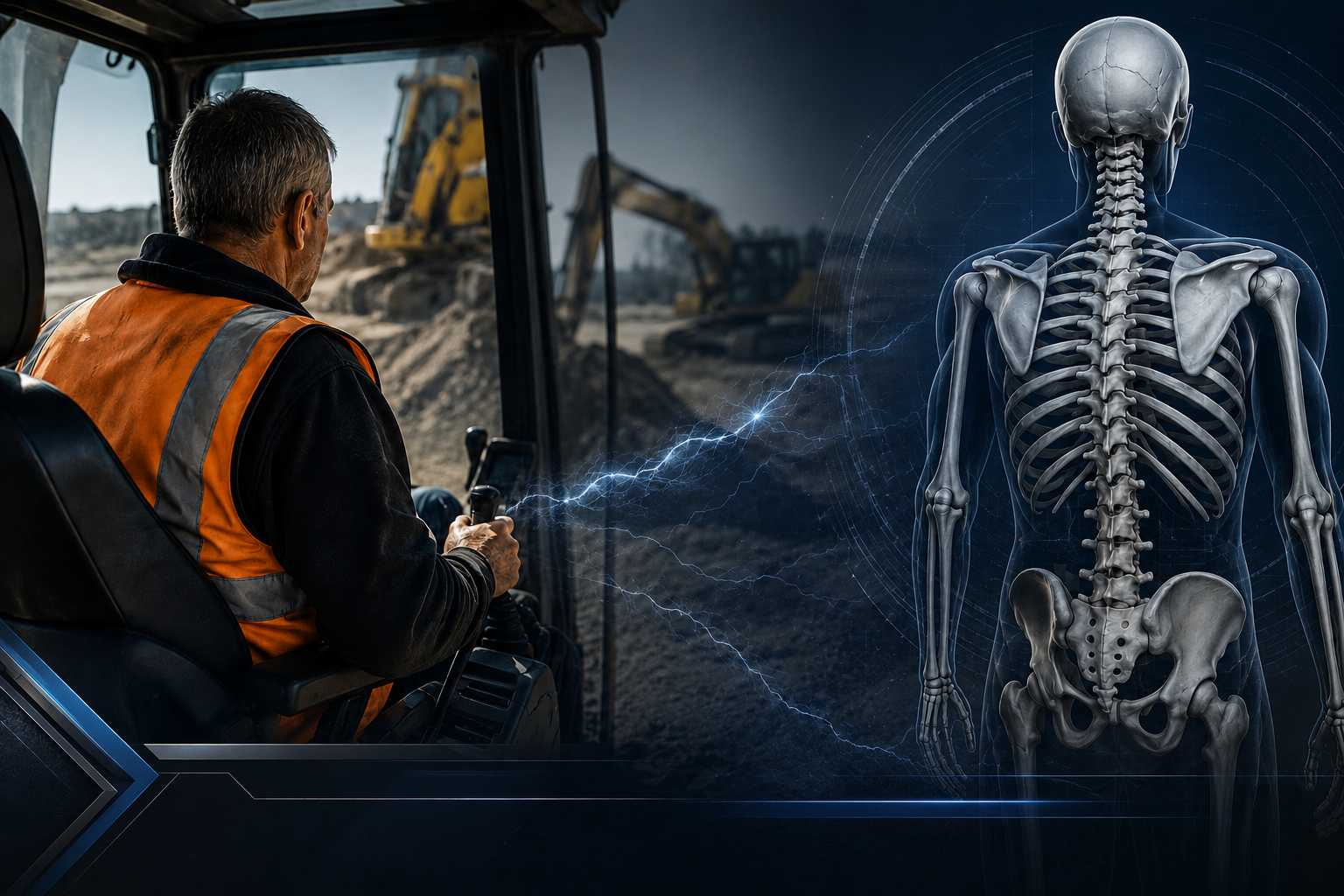
    • How Cab Vibration Affects Your Body Over Time
    • Your Skeleton Adapts to the Life You Live

    You Don’t Need to Train Like a Bodybuilder

    One concern many people have is that strength training means spending hours in the gym.

    It doesn’t.

    Two or three well-planned sessions each week are enough for most people to make meaningful improvements.

    The goal isn’t to become a competitive powerlifter.

    The goal is to remain capable.

    To keep lifting.

    To keep moving well.

    To keep working if you choose to.

    To stay independent as you get older.

    Final Thoughts

    Ageing is inevitable.

    Losing strength doesn’t have to be.

    Strength training is one of the few things we know consistently improves muscle, bone health, balance, mobility and overall physical function as we get older.

    Whether you’re a machine operator, tradesman or simply someone who wants to stay active, investing in strength today makes it more likely you’ll still be capable years from now.

    About the Author

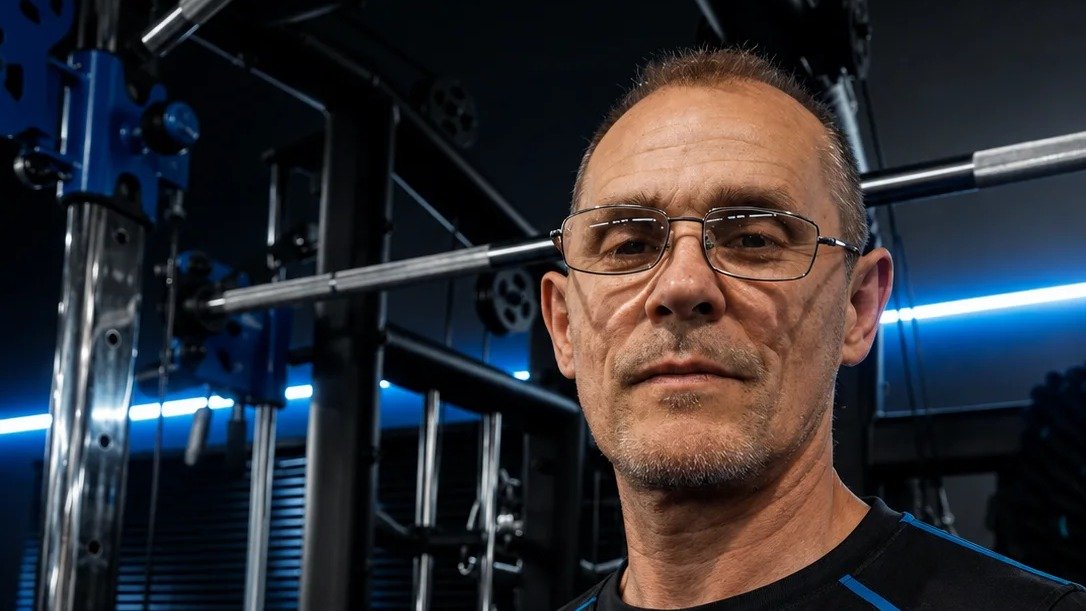
    Stewart is the founder of Axon Fitness and has spent more than 40 years working in construction, including machine driving, tiling, demolition, decorating and refurbishment work.

    Alongside decades of hands-on site experience, he also worked as a personal trainer and now helps machine operators, tradesmen and adults over 40 stay strong, mobile and capable for the long term.

    Stay Strong, Mobile and Capable

    Want practical guidance built around real working life rather than fitness fads?

    Visit axon.fitness to learn more about strength training and mobility for machine operators, tradesmen and adults over 40.
  • Why Every Machine Operator Over 40 Should Know About Creatine

    Why Every Machine Operator Over 40 Should Know About Creatine

    Mention creatine and most people immediately think of bodybuilders.

    Big muscles.

    Gym mirrors.

    Protein shakers.

    But that view is badly out of date.

    Today, creatine is one of the most researched supplements available, and the people who may benefit most aren’t necessarily young bodybuilders.

    They may be machine operators, tradesmen and adults over 40 who simply want to stay strong, capable and independent for as long as possible.

    What Is Creatine?

    Creatine is a natural compound found in your muscles and brain.

    Your body produces some on its own, and you also get small amounts from foods such as meat and fish.

    Its primary role is helping your body produce energy during short bursts of activity.

    That could be:

    • Lifting a bag of cement.
    • Climbing in and out of a machine.
    • Carrying materials across site.
    • Strength training in the gym.

    Creatine isn’t a steroid.

    It’s one of the most heavily researched sports nutrition supplements ever studied.

    Research review:

    https://jissn.biomedcentral.com/articles/10.1186/s12970-017-0173-z

    What Happens After 40?

    One of the realities of ageing is that muscle mass gradually declines.

    This process is known as sarcopenia.

    Strength declines.

    Recovery slows.

    Physical tasks that once felt easy begin to feel harder.

    This is one reason I wrote:

    How to Get Fit After 40

    The goal isn’t to fight ageing.

    The goal is to maintain as much strength, movement and physical capability as possible.

    Why Creatine May Help Machine Operators

    Most machine operators spend long hours sitting.

    Even when you’re working hard mentally, your muscles aren’t receiving the same stimulus they would during regular strength training.

    Over time this can contribute to reduced muscle mass and physical capacity.

    Creatine may help support:

    • Muscle maintenance.
    • Strength development.
    • Training performance.
    • Recovery from exercise.

    Research suggests creatine supplementation combined with resistance training can help older adults improve strength and lean muscle mass.

    https://pubmed.ncbi.nlm.nih.gov/28615996/

    This doesn’t mean creatine does the work for you.

    It means it may help support the work you’re already doing.

    It’s Not Just About Muscle

    One area that has attracted increasing attention is brain function.

    Machine operators spend hours concentrating.

    You’re constantly:

    • Watching surroundings.
    • Monitoring machine movements.
    • Assessing risks.
    • Making decisions.

    Emerging research suggests creatine may play a role in supporting cognitive performance, particularly during periods of mental fatigue and sleep deprivation.

    Research review:

    https://pmc.ncbi.nlm.nih.gov/articles/PMC7916590/

    Scientists are still learning about these effects, but the findings are interesting.

    Is Creatine Safe?

    This is one of the most common questions people ask.

    Creatine has been extensively studied over many years.

    Current research indicates that creatine monohydrate is safe for healthy individuals when used as recommended.

    Position stand:

    https://jissn.biomedcentral.com/articles/10.1186/s12970-021-00412-w

    If you have existing kidney disease or a medical condition, speak with your healthcare professional before taking any supplement.

    What About Water Retention?

    Some people worry that creatine causes excessive water retention.

    In reality, creatine increases water stored within muscle tissue.

    This is different from feeling bloated or retaining water under the skin.

    For most people, any weight gain is relatively small and reflects increased water stored inside the muscle.

    Do You Need a Loading Phase?

    Many supplement companies recommend a loading phase.

    In practice, most people don’t need one.

    A simple approach is:

    3–5 grams of creatine monohydrate per day.

    Take it consistently.

    That’s it.

    No complicated protocol required.

    The Real Reason I Take Creatine

    At 60 years old, I’m not taking creatine because I want to become a bodybuilder.

    I’m taking it because I want to maintain strength.

    I want to maintain muscle.

    I want to keep doing the things I enjoy.

    And I want to stay physically capable for as long as possible.

    For machine operators and tradesmen, that’s often the real goal.

    Not looking impressive.

    Being able to keep moving, working and living independently.

    Frequently Asked Questions

    Is creatine only for bodybuilders?

    No. Creatine is used by athletes, older adults and everyday people looking to support strength and physical performance.

    What is the best type of creatine?

    Creatine monohydrate is the most researched and cost-effective form.

    How much creatine should I take?

    Most research supports 3–5 grams per day.

    Can adults over 40 take creatine?

    Yes. In fact, many studies focus specifically on older adults because of its potential role in maintaining strength and muscle mass.

    Do I need to cycle creatine?

    Current evidence does not suggest that cycling is necessary for healthy individuals.

    Final Thoughts

    Most machine operators spend a lot of time thinking about maintaining their machinery.

    Regular servicing prevents problems before they happen.

    The same principle applies to your body.

    Creatine isn’t a miracle supplement.

    It won’t replace training, movement, sleep or good nutrition.

    But it may be one useful tool that helps you maintain strength, muscle and physical capability as you get older.

    For many machine operators over 40, that’s a worthwhile investment.

    If you’d like practical fitness advice designed specifically for machine operators and tradesmen, visit:

    axon.fitness

    About the Author

    Stewart Axon is the founder of Axon Fitness. With more than 40 years of experience in construction, machine operating and physical trades, he understands first-hand the wear and tear that demanding work places on the body. Through Axon Fitness, he helps machine operators, tradesmen and adults over 40 stay strong, mobile and capable for the long haul.

  • Why Working Hard Isn’t the Same as Staying Fit

    Why Working Hard Isn’t the Same as Staying Fit

    If you’ve worked in construction long enough, you’ve probably heard it before.

    “I don’t need the gym. I work hard all day.”

    And on the surface, it sounds reasonable.

    After all, construction is physically demanding.

    Machine operators spend long hours concentrating in the cab. Tradesmen lift, carry, bend, twist, kneel and climb. Labourers can easily finish a shift feeling completely exhausted.

    The problem is that being tired and being fit are not always the same thing.

    In fact, many workers are physically exhausted while at the same time becoming less mobile, less resilient and less fit as the years go by.

    Fatigue and Fitness Are Not the Same Thing

    One of the biggest misconceptions in construction is believing that because work feels hard, it must automatically improve fitness.

    Work creates fatigue.

    Fitness is the body’s ability to perform and recover.

    They’re not the same thing.

    A machine operator may spend ten hours concentrating, sitting, absorbing vibration and dealing with mental fatigue.

    A tradesman may spend the day carrying materials, kneeling on floors or working overhead.

    Both may finish the day exhausted.

    But exhaustion alone doesn’t automatically improve:

    • mobility
    • cardiovascular fitness
    • strength balance
    • joint health
    • movement quality
    • or long-term resilience

    Research has shown that physically demanding occupations do not necessarily provide the same health benefits as structured exercise. This is sometimes referred to as the “physical activity paradox.”

    https://bjsm.bmj.com/content/52/3/149

    Repetitive Work Creates Repetitive Bodies

    The body adapts to whatever it does most often.

    That’s why machine operators often develop:

    • tight hips
    • stiff lower backs
    • restricted shoulders
    • poor circulation
    • reduced movement variety

    I discussed this further in:

    You Sit for 16 Hours a Day. Here’s What That’s Doing to Your Body.

    The same thing happens to tradesmen.

    A tiler spends years kneeling.

    A decorator spends years reaching overhead.

    A groundworker spends years lifting from awkward positions.

    The body becomes extremely good at those positions.

    But it can gradually lose capacity everywhere else.

    Work Doesn’t Always Build Balanced Strength

    Many workers are strong.

    Very strong.

    But strength developed through work is often highly specific.

    You might carry heavy materials every day yet struggle to:

    • squat properly
    • touch your toes
    • rotate your shoulders fully
    • maintain good posture
    • or move without stiffness

    That’s because repetitive work loads the same tissues repeatedly.

    Balanced strength training helps fill the gaps.

    Research consistently shows that resistance training improves strength, mobility, bone health and physical function as we age.

    https://pubmed.ncbi.nlm.nih.gov/30946242/

    This isn’t about bodybuilding.

    It’s about maintaining a body that works well.

    The Cost of Constant Wear and Tear

    Construction can be physically demanding without being physically protective.

    Over years, many workers accept:

    • stiffness
    • aches
    • reduced movement
    • lower energy
    • slower recovery

    as simply part of getting older.

    The reality is that many of these changes are not caused by age alone.

    They’re often the result of decades of repetitive movement, limited recovery and neglecting the basic maintenance the body needs.

    What Real Fitness Looks Like for Working People

    For most construction workers, fitness isn’t about six-pack abs.

    It’s about:

    • getting out of the cab without stiffness
    • climbing ladders confidently
    • lifting safely
    • recovering faster
    • reducing aches and pains
    • having energy left after work
    • staying independent later in life

    That’s real-world fitness.

    And sometimes that means doing things your job doesn’t provide.

    Walking.

    Mobility work.

    Strength training.

    Better recovery habits.

    Better sleep.

    Regular movement outside work.

    Final Thoughts

    Working hard deserves respect.

    Construction workers earn every penny.

    But working hard and staying fit are not automatically the same thing.

    Work can wear the body down just as easily as it can build it up.

    The goal isn’t to stop working hard.

    The goal is to give your body the movement, strength and recovery it needs so you can keep doing the things that matter for years to come.

    Because being exhausted at the end of the day isn’t necessarily a sign of fitness.

    Sometimes it’s simply a sign that your body needs better support.

    About the Author

    I’m Stewart, founder of Axon Fitness.

    I’ve spent over 40 years working in construction — from labouring and demolition to tiling, bathroom refurbishments and operating 360 excavators. I’ve also worked as a personal trainer, which gave me a deeper understanding of how physically demanding work changes the body over time.

    Axon Fitness was built around a simple idea:

    Helping working people stay strong, mobile and capable for the long haul.

    Not bodybuilding.

    Not fitness trends.

    Just practical movement, strength and recovery strategies built for real life, long hours and ageing bodies.

    Especially for:

    • machine operators
    • tradesmen
    • construction workers
    • and adults over 40 who want to keep moving properly for years to come.

    axon.fitness

  • Your Skeleton Adapts to the Life You Live

    Your Skeleton Adapts to the Life You Live

    Most people think about muscles when they think about fitness.

    Bigger muscles.
    Stronger muscles.
    Tighter muscles.

    But muscles are only part of the picture.

    Your entire skeleton adapts to the life you repeatedly live.

    And for many machine operators, drivers and tradesmen, that life often involves:

    • long hours sitting
    • reduced movement variety
    • vibration
    • less walking than people realise
    • and long periods of physical inactivity outside work due to fatigue.

    Over time, the body adapts to all of it.

    Not just through stiffness and tight hips.

    Through the skeleton itself.

    Bones Are Living Tissue

    A lot of people still think bones are fixed structures that simply weaken with age.

    But bone is living tissue that constantly remodels itself throughout life.

    The body strengthens structures that are regularly used and loaded.

    And when movement and loading reduce over long periods, the body adapts to that too.

    Research has shown that bones respond to mechanical loading and movement by increasing strength and density over time.

    https://pmc.ncbi.nlm.nih.gov/articles/PMC6279907/

    That’s one reason regular movement and resistance training become increasingly important as we get older.

    Sitting Changes More Than Posture

    Machine operators may spend:

    • 8 to 12 hours sitting in machinery
    • then another hour or more commuting
    • followed by evenings recovering from fatigue.

    Many workers also stop moving much outside work because they’re physically drained from the week.

    I talked more about this in:
    You Sit for 16 Hours a Day. Here’s What That’s Doing to Your Body.

    The problem is that the body adapts to reduced movement surprisingly quickly.

    Less walking.
    Less climbing.
    Less carrying.
    Less impact through the skeleton.

    Over years that can contribute to:

    • reduced mobility
    • lower strength
    • poorer balance
    • increased stiffness
    • and declining physical resilience.

    Especially after 40.

    Why Resistance Training Helps Bone Strength

    One of the most overlooked benefits of strength training is what it does for the skeleton.

    When muscles contract, they pull on tendons.

    Those tendons attach to bone.

    That pulling force creates stress through the skeleton, which helps stimulate bone remodelling and strengthening over time.

    Research consistently shows resistance training can help improve or maintain bone density, particularly as people age.

    https://pubmed.ncbi.nlm.nih.gov/30946242/

    This doesn’t mean people need bodybuilding routines or fancy gym programmes.

    Simple strength work still matters:

    • squats
    • carries
    • pushing
    • pulling
    • lifting awkward loads
    • climbing
    • loaded movement

    The body responds to being used.

    Heavy Work Does Load the Skeleton

    Traditional trades often involved more natural bone loading than modern seated work.

    Years ago many workers:

    • carried materials constantly
    • climbed more
    • lifted awkward loads regularly
    • and moved far more throughout the day.

    That physical loading placed stress through the skeleton.

    Modern machinery has reduced strain in many positive ways.

    But one downside is that some operators now spend huge parts of the day relatively motionless.

    That’s one reason movement outside the cab becomes important.

    Even short movement breaks and strength work can help offset some of the stiffness and inactivity that builds over time.

    I covered some simple movement ideas here:
    Stretches for Machine Operators: Reduce Stiffness and Back Pain in the Cab

    Staying Structurally Strong Matters

    This isn’t about looking impressive.

    It’s about staying physically capable later in life.

    Strong bones, healthy joints and good movement matter for:

    • balance
    • coordination
    • injury reduction
    • mobility
    • independence
    • and staying active as you age.

    The body adapts to whatever you repeatedly ask it to do.

    If you stop loading it, stop moving it and spend years mostly sitting, the body adapts accordingly.

    But the opposite is also true.

    Consistent movement, resistance training and regular loading can help the body remain stronger, more capable and more resilient for far longer than many people realise.

    About the Author

    I’m Stewart, founder of Axon Fitness.

    I’ve spent over 40 years working in construction — from labouring and demolition to tiling, bathroom refurbishments and operating 360 excavators. I’ve also worked as a personal trainer, which gave me a deeper understanding of how physically demanding work changes the body over time.

    Axon Fitness was built around a simple idea:

    Helping working people stay strong, mobile and capable for the long haul.

    Not bodybuilding.
    Not fitness trends.
    Just practical movement, strength and recovery strategies built for real life, long hours and ageing bodies.

    Especially for:

    • machine operators
    • tradesmen
    • construction workers
    • and adults over 40 who want to keep moving properly for years to come.

    axon.fitness

  • Why Your Back Pain Might Be a Hydration Problem

    Why Your Back Pain Might Be a Hydration Problem

    Most men over 40 with back pain have already tried the usual fixes. They’ve stretched. They’ve taken ibuprofen. Some have even bought a new mattress. And still, the lower back tightens up every morning and nags them through the day.

    What almost none of them have tried? Drinking more water.

    Not because they’re lazy. Because nobody told them that hydration may play a part in how your back feels – and that the link starts with the discs in your spine.

    Your Spinal Discs Are Mostly Water

    Between every vertebra in your spine sits a disc. Its job is to absorb shock, create space, and allow you to bend and twist without bone grinding on bone.

    The centre of each disc is roughly 80% water when you’re young. That percentage naturally drops as you get older.

    Each disc has a tough outer shell (the annulus fibrosus) and a soft, gel-like centre (the nucleus pulposus). That gel centre is where the water lives. When it’s full, the disc does its job. It cushions, it creates space, it keeps the vertebrae apart.

    As discs lose water with age, they gradually thin and the gap between vertebrae narrows. In some people these changes go along with stiffness or back pain, and occasionally pressure on a nerve that causes pain down the leg – although plenty of people with disc changes have no pain at all.

    The Problem Gets Worse If You Sit All Day

    Here’s what most people don’t realise: your spinal discs lose water throughout the day just through normal movement and gravity. That’s expected. The body rehydrates them overnight when you’re lying down and the pressure is off the spine.

    But if you’re sitting for 8–10 hours – at a desk, in a vehicle, in the cab – that compression is relentless. The discs are being squeezed for hours on end, losing fluid faster than they can recover. Getting up and moving regularly takes some of that pressure off and gives your discs a chance to recover.

    If you’re a machine operator spending 8–10 hours in the cab, this compounds fast – here’s what long hours in the cab are doing to your body.

    Over time, this isn’t just discomfort. Disc changes like these are linked with:

    • Reduced range of motion (why you feel stiff getting up in the morning)
    • Increased risk of disc bulges and herniations
    • Nerve compression and referred pain down the legs
    • Disc degeneration – a gradual process that’s hard to reverse

    This is a slow build. You don’t feel it happening. You just notice one day that your back is constantly sore and your mobility isn’t what it was.

    It’s Easy to Be Under-Hydrated Without Realising It

    Here’s something worth knowing: thirst often only kicks in once you’ve already lost some body water. Research shows that even mild dehydration – around 2% of body weight – can affect physical performance, concentration and mood.

    Thirst also tends to become less reliable as we get older, so it’s easy to drink less than you need without noticing – especially on a busy shift.

    Common signs that you’re not drinking enough (NHS):

    • Feeling thirsty
    • Dark yellow, strong-smelling urine
    • Peeing less often than usual
    • Feeling tired, dizzy or lightheaded
    • A dry mouth, lips and tongue

    Sound familiar?

    What Good Hydration Actually Looks Like

    Before I give you numbers, one thing to know: water is the best choice. Tea and coffee still count towards your daily fluid (NHS), but don’t rely on strong coffee all day, and keep sugary soft drinks to a minimum.

    A rough guide for men over 40:

    • Baseline: the NHS suggests 6–8 glasses (roughly 1.5–2 litres) of fluid a day
    • If you’re active, training or working in the heat: drink more to replace what you lose in sweat
    • Timing: spread it through the day – don’t try to catch up in the evening
    • Morning: a large glass of water first thing helps replace what you lost overnight (your body loses water while you sleep)
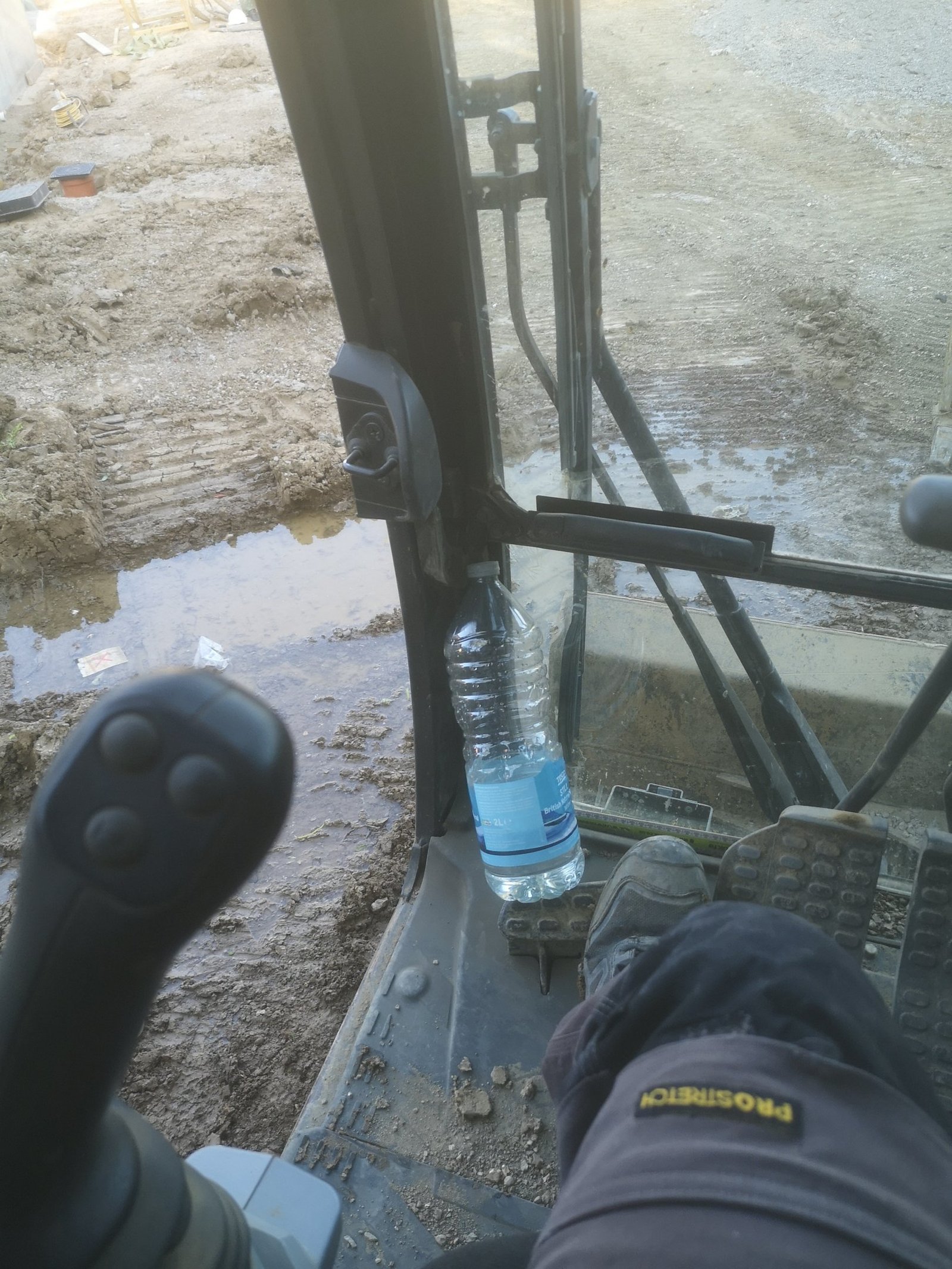
    • On shift: if you’re in the cab or at a desk all day, keep a water bottle where you can see it. Out of sight, out of mind.

    One practical marker: your urine should be pale straw coloured. Dark yellow means you’re behind. Clear means you’ve overcorrected. Pale straw is the target.

    Hydration Alone Won’t Fix a Structural Problem

    I want to be straight with you here. If you’ve got a genuine disc herniation or nerve compression issue, drinking more water isn’t going to fix it overnight. Dehydrated discs that have thinned over years don’t fully reverse – that’s just the reality.

    But staying well hydrated is still worth doing:

    • It helps you stay alert and less tired through a long shift
    • Dehydration can make your muscles tire sooner – and tired muscles give your back less support
    • It’s one part of looking after your back, alongside movement, strength and breaking up long spells of sitting
    • It can make a real difference to how you feel day to day

    It’s not a miracle. But it’s one of the simplest, cheapest things you can do – and many people don’t do it consistently.

    This Is Why It Pays to Look at the Full Picture

    For men over 40, it’s not just about what you’re doing in training. It’s worth looking at everything that’s affecting how the body functions – including sleep, stress, nutrition, and yes, hydration.

    Because you can do all the right exercises and still feel terrible if the basics aren’t in place. The spine needs structure, movement, and fluid to work properly. All three matter.

    If you’re dealing with persistent back pain, it’s worth getting it checked by your GP or a physiotherapist.

    Got a question about anything in this article? Send me a message through the contact form.

    About the Author

    I’ve spent 40+ years working in construction and professional fitness training. I know what it does to your body because I’ve lived it. Axon Fitness exists to help machine operators and men over 40 stay strong, mobile, and capable.

  • How to Get Fit After 40 When You’re Stiff and Out of Shape

    How to Get Fit After 40 When You’re Stiff and Out of Shape

    Feeling stiff, out of shape and not sure where to start? Here’s what actually works for men over 40 who want to get back in shape without wrecking themselves.

    Why Getting Fit After 40 Feels So Hard (And Why It’s Not Too Late)

    You remember being fitter. You moved easier, recovered quicker, and didn’t think twice about getting up off the floor. At some point, somewhere between the job, the family, and just getting on with life, that changed.

    Now you’re stiff in the morning. You’re carrying weight you didn’t used to carry. You get tired quicker than you should. And every time you think about doing something about it, the whole thing feels overwhelming, because the advice you find online seems to be written for someone half your age.

    I hear this all the time. And I want to be straightforward with you: it’s not too late, and it’s not as complicated as the fitness industry makes it look. But you do need to understand what’s actually happening in your body after 40, because it changes what you should be doing about it.

    What Actually Changes After 40

    There are real physiological changes that happen as you get older. None of them are catastrophic. But ignoring them is why a lot of men over 40 try to get back in shape and end up hurt, frustrated, or both.

    Muscle loss accelerates. From your mid-30s onwards, you lose muscle mass more quickly than you did when you were younger. This is called sarcopenia, and it’s one of the main reasons men over 40 feel weaker and more tired without doing anything obviously different. The good news is that strength training directly reverses it. Your body still responds, it just needs the right signal.

    Recovery takes longer. A 25-year-old can train hard, sleep badly, and bounce back. You can’t, and trying to work on that timeline is a fast route to injury. Rest and recovery aren’t optional extras, they’re part of the training.

    Testosterone drops gradually. Lower testosterone means it’s harder to build and hold onto muscle, and easier to accumulate fat around the middle. Again, not a death sentence. Strength training is one of the most effective natural ways to support healthy testosterone levels.

    Joints accumulate wear. Decades of work, sport, carrying loads, and just living take a toll on your joints. That stiffness you feel in the morning isn’t in your head, it’s your body taking longer to warm up than it used to. This means your warm-up matters more than it did at 25, and your training needs to support your joints rather than hammer them.

    None of this means you’re done. It means you need to train smarter than you did in your 20s, which, honestly, isn’t a high bar.

    The Biggest Mistake Men Over 40 Make When Getting Back in Shape

    Going too hard, too fast.

    I’ve seen it dozens of times. A man in his 40s or 50s decides enough is enough, walks into a gym, and starts training like he’s 22. Three weeks later his knees hurt, his back is giving him grief, and he’s convinced his body just can’t do it anymore.

    The body can do it. The problem was the approach.

    Your joints and connective tissue, tendons, ligaments, don’t adapt as quickly as your muscles do. Your muscles might feel fine after a hard session, but the tendons holding everything together haven’t caught up yet. That’s where injuries come from when you come back too aggressively after years off.

    The other mistake is jumping straight to high-intensity training, circuits, bootcamps, HIIT classes, because it feels like the fastest route to results. For a deconditioned body over 40, high intensity before you’ve built a foundation is like running before you can walk. It works for a while, right up until something breaks.

    Start slower than you think you need to. Build the foundation first. The results still come, and they stick around longer.

    How to Start Without Wrecking Yourself

    The first four weeks are about building a base, not making up for lost time.

    Start with three sessions a week. Not five. Not every day. Three, with rest between each one. Your body does its adapting during recovery, not during the session itself. Give it time to do that.

    Keep sessions to 30–40 minutes. A focused 30-minute session done three times a week will change your body. A sporadic two-hour session once a week won’t.

    Move before you train. Ten minutes of gentle movement before you do anything else, hips, shoulders, spine, makes a significant difference both to how you feel during the session and to your injury risk. Don’t skip it.

    Use effort levels you can sustain. If you’re breathless and can’t hold a conversation, you’re working too hard for this phase. You want to feel like you’ve worked, not like you’ve been through a blender.

    This isn’t a forever approach, it’s a starting approach. After four to six weeks of this, your body is ready for more, and you can push harder. But this is the foundation that makes everything else work.

    What to Focus On: Strength, Mobility, and Consistency

    These are the three things that actually move the needle for men over 40.

    Strength training. Not bodybuilding, functional strength. Squats, hinges, presses, rows. Movements that carry over into real life. This is what preserves muscle mass, supports your joints, keeps your metabolism working, and makes you feel capable again. It’s also the single most effective thing you can do for long-term health as you age.

    Mobility work. Stiffness is usually a mobility problem, not a damage problem. Regular, consistent mobility work, hips, thoracic spine, shoulders, is what stops you feeling locked up. Ten minutes a day, done consistently over weeks, will change how you move and how you feel more than most people expect.

    Consistency over intensity. This is the one that matters most. A moderate session done three times a week, every week, for three months, will deliver results that no amount of sporadic hard sessions can match. The body adapts to what it does repeatedly. Make showing up the habit, and the results follow.

    A Simple Starting Point

    If you want something to do this week, start here:

    • Monday: 30–40 minute full body strength session (3 sets of 5–6 exercises, moderate weight)
    • Wednesday: 20 minute mobility session (hips, spine, shoulders)
    • Friday: 30–40 minute full body strength session

    That’s it. Three sessions. Under two hours of total training across the whole week. Done consistently for six weeks, most men notice real changes, less stiffness in the morning, more energy, clothes fitting differently.

    It’s not complicated. The hard part is starting, and then not stopping when life gets in the way.

    Ready to Stop Guessing?

    The problem with trying to figure this out alone is that most of what’s out there wasn’t written for men in their 40s and 50s who’ve spent decades working hard and want a realistic route back to feeling good in their bodies.

    That’s exactly who Axon Fitness was built for.

    If you’d like help working out where to start, send me a message through the contact form and we’ll have a straightforward conversation about what you need. No sales pitch. No generic plan.

    Related reading: